Aug 22nd, 2007
The Ten Habits of Highly Effective Brains
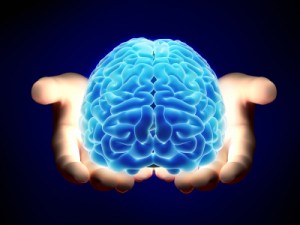
The LA Times just completed a wonderful 4-part series on how learning and memory work. The NYT re-emphasized the importance of physical exercise for neurogenesis (the creation of new neurons). To put this news in better perspective, let's review some good lifestyle options we can follow to maintain, and improve, our vibrant brains.
- 1. Learn what is the "It" in "Use It or Lose It". A basic understanding will serve you well to appreciate your brain's beauty as a living and constantly-developing dense forest with billions of neurons and synapses.
- 2. Take care of your nutrition. Did you know that the brain only weighs 2% of body mass but consumes over 20% of the oxygen and nutrients we intake? As a general rule, you don't need expensive ultra-sophisticated nutritional supplements, just make sure you don't stuff yourself with the "bad stuff".

- 3. Remember that the brain is part of the body. Things that exercise your body can also help sharpen your brain: physical exercise enhances neurogenesis.
- 4. Practice positive, future-oriented thoughts until they become your default mindset and you look forward to every
new day in a constructive way. Stress and anxiety, no matter whether induced by external events or by your own thoughts, actually kills neurons and prevent the creation of new ones. You can think of chronic stress as the opposite of exercise: it prevents the creation of new neurons. - 5. Thrive on Learning and Mental Challenges. The point of having a brain is precisely to learn and to adapt to challenging new environments. Once new neurons appear in your brain, where they stay in your brain and how long they survive depends on how you use them. "Use It or Lose It" does not mean "do crossword puzzle number 1,234,567". It means, "challenge your brain often with fundamentally new activities".

- We are (as far as we know) the only self-directed organisms in this planet. Aim high. Once you graduate from college, keep learning. The brain keeps developing, no matter your age, and it reflects what you do with it.
- Explore, travel. Adapting to new locations forces you to pay more attention to your environment. Make new decisions, use your brain.
- Don't Outsource Your Brain. Not to media personalities, not to politicians, not to your smart neighbour... Make your own decisions, and mistakes. And learn from them. That way, you are training your brain, not your neighbour's.
- Develop and maintain stimulating friendships. We are "social animals", and need social interaction. Which, by the way, is why 'Baby Einstein' has been shown not to be the panacea for children development.
- Laugh. Often. Especially to cognitively complex humor, full of twists and surprises. Better, try to become the next Jon Stewart (Note: I just corrected his name from "John"...which may call for a #11: Spellcheck!)
Now, remember that what counts is not reading this article-or any other-, but practicing a bit every day until small steps snowball into unstoppable, internalized habits...so, pick your next battle and try to start improving at least one of these 10 habits today! For more in-depth information on these topics, check our Brain Fitness Topics section.


Nice read, I agree with a lot of these points
Additionally, I find I can concentrate far better after some exercise than after a big meal. Makes a big difference what the rest of the body is doing when you're trying to think.
My favorites are: practice positive, future-oriented thoughts; thrive on Learning and Mental Challenges & Develop and maintain stimulating friendships.
Nice post.
ah...the good life. so easy to do when you don't have to worry about war and poverty and "stuff"...
[...] read more | digg story Posted in Spiritual Journey RSS 2.0 *Name [...]
nice post.. thanks..
[...] Ten Habits of HIghly Effective Brains Published on August 23rd, 2007 in interesting [...]
Rasy, Eddie, Onasis Jv, Wildan: thanks for your visit, and comments.
Eddie: great observation.
Onasis: you picked 3 nice ones-happy that you enjoy them.
JV: I have worried a lot about hunger, poverty, injustice, and "stuff". Now I try to focus on what I can DO to help solve or alleviate those problems. Simply worrying doesn't help anyone, neither you nor them. I think what role I can play to be part of the solution. And act. Start small, and let it grow.
[...] read more | digg story [...]
Regarding number 2, I wondered beyond fish and maybe gingko what might be deemed nutrition for the brain...
We answered a similar question recently:
Question:
- Are there herbal and vitamin supplements that will protect my memory?
Key Points:
- Omega-3 and omega-6 fatty acids found in cold-water fish may be helpful to long term brain health.
- Folic acid may also be helpful to both cognitive function and hearing.
- Ginkgo biloba and DHEA do not appear to help your brain.
- There is still more research to be done and never dismiss the placebo effect!
http://www.sharpbrains.com/blog/2007/02/22/are-there-herbal-and-vitamin-supplements-that-will-protect-my-memory/
Also, we summarized some of the findings regarding nutrition:
- Eat a variety of foods of different colors without a lot of added ingredients or processes
- Plan your meals around your vegetables, and then add fruit, protein, dairy, and/or grains
- Add some cold-water fish to your diet (tuna, salmon, mackerel, halibut, sardines, and herring) which contain omega-3 fatty acids
- Learn what a portion-size is, so you don't overeat
- Try to eat more foods low on the Glycemic Index
- If you can only do one thing, eat more vegetables, particularly leafy green ones
http://www.sharpbrains.com/blog/2007/04/11/easy-steps-to-improve-your-brain-health-now/
But, in short, we like the advice given in the Dana Guide to Brain Health, that the general rule here is that what is good for the body is also good for the brain, and to be wary of diets advertised as "brain food".
http://www.sharpbrains.com/blog/2006/12/30/the-dana-guide-to-brain-health-book-review/
[...] read more | digg story [...]
脳を鍛える10の方法...
The Ten Habits of Highly Effective Brains
まるで人生の教本のような10項目だなぁ。
10番目に書かれているのは「よく笑うこと」。
大切です。
脳を鍛えるのは難しい。
そして脳は衰えやす...
[...] Read more. [...]
Yes, I can agree with much of this. Particularly with the segments 'learn', 'explore,travel' and 'laugh often'.
This article is loaded with grammatical & factual errors and typos yet I am supposed to take advice about intelligence from it?
"the brain only weights 2% of body mass"
- if grammar is your weakness, use the grammar checker in ms word. this does not look good when lecturing the world on intelligence.
"We are (as far as we know) the only self-directed organisms in this planet."
- really? are all the other organisms directed by something other than their own instincts?
"Stress and anxiety, no matter whether induced by external events or by your own thoughts, actually kills neurons and prevent the creation of new ones."
- do you have a citation for this dubious claim?
"try to become the next Jon Stewart"
- i thought we weren't supposed to outsource our brains.
[...] " The Ten Habits of Highly Effective Brains " Brain Fitness Revolution at SharpBrains [...]
Does doing arm workouts in my chair while reading science blogs help my brain like double?
[...] read more | digg story [...]
[...] The Ten Habits of Highly Effective Brains - [SharpBrains] digg_url = 'http://www.lifehack.org/articles/lifestyle/10-habits-of-effective-brains.html'; ( function() { var ds=typeof digg_skin=='string'?digg_skin:''; var h=80; var w=52; if(ds=='compact') { h=18; w=120; } var u=typeof digg_url=='string'?digg_url:(typeof DIGG_URL=='string'?DIGG_URL:window.location.href); document.write(""); } )() Author: Craig Childs Posted: Friday, August 24th, 2007 at 7:30 am Tags: brain Bookmark or Share this with a friend! [...]
[...] The Ten Habits of Highly Effective Brains [...]
[...] I found a good list of 10 Habits of Highly Effective Brains, or at least their owners. [...]
[...] 24th, 2007 · No Comments Did you know that the brain only weights 2% of body mass but consumes over 20% of the oxygen andnutrients we intake? Sharp Brains has an interesting article on the 10 habits of highly effective brains. [...]
I like the part about keeping the process of learning going after college. So many folks I know think their learning is complete and consider reading news or watching documentaries the same as all the learning they've done up to that point. Gotta keep the grey matter in top shape!
Levi: most likely... especially if you read the Neurophilosopher's posts often.
Jerry: you are not "supposed" to do anything. I have written this article. You have found it. If you enjoy it, be my guest. If you give me feedback, I will improve. If you don't like it, so be it. Note that I don't use the word "intelligence" but "habits", because we are not talking about being smart or not, but simply about doing our best, learning, adapting.
On the 3 specific points you raise: there are no factual errors. May I suggest that you pay more attention to the substance than to one typo? (Your choice).
1) Humans are not directed (influenced, yes) by instincts. Our larger and better connected frontal lobes allow us to make our own, meaningful, decisions and plan in life, beyond the influence of our genes and cultural environment (what you can say our "instincts" are). You may enjoy this post on the role of the Frontal Lobes and Executive Functions using a Bill Gates' speech as example
http://www.sharpbrains.com/blog/2007/06/16/on-bill-gates-harvard-commencement-speech-and-his-frontal-lobes/
and also this post based on Richard Dawkins' The Selfish Gene
http://www.sharpbrains.com/blog/2007/06/17/richard-dawkins-and-alfred-nobel-beyond-nature-and-nurture/
2) Stress and anxiety:
BBC article titled Stressful Event Kills Brain Cells
http://news.bbc.co.uk/2/hi/health/6442001.stm
Our colleague Caroline wrote recently about the science behind: Dr. Robert Sapolsky, in an interview about his book Why Zebras Don’t Get Ulcers, points out that humans uniquely “can get stressed simply with thought, turning on the same stress response as does the zebra.” But, the zebra releases the stress hormones through life-preserving action, while we usually just keep muddling along, getting more anxious by the moment.
Prolonged exposure to the adrenal steroid hormones like cortisol, released during the stress response, can damage the brain and block the formation of new neurons in the hippocampus, which is the key player in encoding new memories in your brain. Recent studies have shown these neurons can be regenerated with learning and environmental stimulation, but while short-term stress may improve attention and memory, chronic stress leads indirectly to cell death and hampers our ability to make changes and be creative enough to even think of possible changes to reduce the stress.
Citations at
http://www.sharpbrains.com/blog/2007/02/15/are-yoga-and-meditation-good-for-my-brain/
3- "become the next Jon Stewart": I am not saying you follow him. I am saying you try to become as successful -and funny- as him. In your own unique way. Information on laughter and the brain at
http://web.sfn.org/index.cfm?pagename=brainBriefings_humorLaughterAndTheBrain
"Personal Development": agreed! Learning means acquiring new skills/ mindsets/ perspectives...which goes well beyond "being informed".
[...] » The Ten Habits of Highly Effective Brains « Brain Fitness Revolution at SharpBrains [...]
[...] 10 Habits of Highly Effective Brains [...]
[...] read more | digg story [...]
[...] I think everyone should keep these in mind. Link. [...]
[...] This is a great list of things you can do to keep your brain in peek condition. Most of them I'm sure you've read before however one in particular seemed to be unique from similar lists. "Don't Outsource Your Brain" meaning make your own decisions and opinions, don't be swayed by politicians (good God don't do that!), media personalities or your "smart" neighbor. I know more than a few people that take everything Rush Limbaugh or Fox News pukes out as the gospel truth. Same can be said for the left I suppose. Form your own opinions, then re-evaluate them every so often, because you might be wrong and if you discover you are, you have just learned something. The list o' stuff is here. [...]
[...] Alvaro Fernandez presents The Ten Habits of Highly Effective Brains posted at SharpBrains: Your Window into the Brain Fitness Revolution, saying, "Some tips to keep our brains sharp." [...]
Recent data published shows a measurable short term improvent (approx 6 hours worth after 1 hour) in cognative function after a dose of flax seed or fish oil with Omega 3's
[...] Lifehacker.org recently posed a link to SharpBrains, a mental health blog that I just might have to subscribe to, with a caveat: they're a bit silly, verging on new-age philosophy about meditation and being in "The Zone", but it's countered with a significant retail presence that besmirches any spiritual inclination to the point of absurdity. Nevertheless, they have some good junk too. The post in question, The Ten Habits of Highly Effective Brains, gives food for thought (ha, ha) on the care of what lies within your cranium. Two of them in particular are key, in my opinion, but I believe they missed one. [...]
[...] 10 Habits of Highly Effective Brains The LA Times just completed a wonderful 4-part series on how learning and memory work. The NYT re-emphasized the importance of physical exercise for neurogenesis (the creation of new neurons). To put this news in better perspective, let's review some good (tags: digg Health Science) [...]
[...] Alvaro Fernandez presents The Ten Habits of Highly Effective Brains posted at SharpBrains: Your Window into the Brain Fitness Revolution, saying, "Some tips to keep our brains sharp." [...]
[...] Alvaro Fernandez presents The Ten Habits of Highly Effective Brains posted at Brain Fitness Blog. Some tips to keep our brains sharp. [...]
[...] Alvaro Fernandez presents The Ten Habits of Highly Effective Brains posted at Brain Fitness Blog. [...]
[...] Alvaro Fernandez presents The Ten Habits of Highly Effective Brains posted at Brain Fitness Blog. [...]
[...] Alvaro Fernandez presents The Ten Habits of Highly Effective Brains posted at Brain Fitness Blog. [...]
[...] Sharp Brains posted an awesome article entitled, "The Ten Habits of Highly Effective Brains." [...]
[...] » The Ten Habits of Highly Effective Brains « Brain Fitness Revolution at SharpBrains "...let's review some good lifestyle options we can follow to maintain, and improve, our vibrant brains." (tags: education gtd brain) [...]
[...] Alvaro Fernandez presents The Ten Habits of Highly Effective Brains posted at SharpBrains: Your Window into the Brain Fitness Revolution, saying, "Some tips to keep our brains sharp." [...]
[...] -The Ten Habits of Highly Effective Brains The LA Times just completed a wonderful 4-part series on how learning and memory work. The NYT re-emphasized the importance of physical exercise for neurogenesis (the creation of new neurons). To put this news in better perspective, let's review some good lifestyle options we can follow to maintain, and improve, our vibrant brains. [...]
[...] Alvaro Fernandez presents The Ten Habits of Highly Effective Brains posted at SharpBrains: Your Window into the Brain Fitness Revolution, saying, "Some tips to keep our brains sharp." [...]
Hello GMan:
As mentioned in a previous comment, we recommend Omega-3s. I'd like to learn more: can you include a reference to that study? Thanks
[...] Alvaro Fernandez presents The Ten Habits of Highly Effective Brains posted at Brain Fitness Blog. [...]
[...] Alvaro Fernandez presents some tips to keep our brains sharp in The Ten Habits of Highly Effective Brains at SharpBrains: Your Window into the Brain Fitness Revolution. [...]
[...] A nice article I have read: The Ten Habits of Highly Effective Brains [...]
[...] The Brain Fitness Blog offers up 10 Habits of Highly Effective Brains. I have a feeling we can all use these tips. [...]
[...] Louise Manning presents Effective leadership posted at The Human Imprint. MDB presents Secrets to Thinking Like an Entrepreneur posted at million dollar blog.com, saying, "A look into the mindset of an entrepreneur" GP presents Wag the Dog posted at Fish Creek House - INNside Innkeeping, saying, "Life Lessons learned from our pets." Matt presents 7 Traits of Success Superstars posted at Realigned Living, saying, "By trying out the habits of overly successful people, we have an increased chance of being overly successful ourselves." Alvaro Fernandez presents The Ten Habits of Highly Effective Brains posted at SharpBrains: Your Window into the Brain Fitness Revolution, saying, "Some tips to keep our brains sharp." Michael Shane Wilson presents Put Yourself Into Position To Win posted at Michael Shane Wilson, saying, "Post to hopefully inspire people take action to achieve their goals in life" [...]
[...] Alvaro Fernandez submits The Ten Habits of Highly Effective Brains on his Brain Fitness Blog. [...]
[...] Alvaro Fernandez presents The Ten Habits of Highly Effective Brains posted at SharpBrains, saying, "Some tips to keep our brains sharp." [...]
[...] Alvaro Fernandez presents The Ten Habits of Highly Effective Brains posted at SharpBrains: Your Window into the Brain Fitness Revolution. [...]
[...] Coincidently, Alvaro of Sharp Brain submitted a post about lifestyle options to help us keep our brains in shape. [...]
[...] The Ten Habits of Highly Effective Brains: our most successful post so far, on how to maintain fit brains, with over 70,000 readers in a few days! [...]
[...] The Ten Habits of Highly Effective Brains by Alvaro Fernandez. [...]
[...] Alvaro Fernandez presents The Ten Habits of Highly Effective Brains posted at SharpBrains: Your Window into the Brain Fitness Revolution, saying, "Some tips to keep our brains sharp." [...]
[...] Alvaro Fernandez presents The Ten Habits of Highly Effective Brains posted at SharpBrains: Your Window into the Brain Fitness Revolution, saying, "Some tips to keep our brains sharp." [...]
hey it's nice honestly it's great bt just try to make it a little shorter to look more interesting to read
Shortest: don't outsource your brain!
I find drinking a lot of water and napping during the day helps keeps my brain sharp, well as sharp as it's going to get. Thanks for some great tips.
Excellent information. All very good advice on how to keep that brain sharpened. Sleep is also vital for improving memory and concentration.
[...] Please go to http://www.sharpbrains.com/blog/2007/08/22/10-habits-of-highly-effective-brains/ to read the entire article. [...]
Hello Steven and Philip, thanks for your additions. Yes, sleep is very important, and well as keeping well hydrated.
[...] Lifehacker.org recently posed a link to SharpBrains, a mental health blog that I just might have to subscribe to, with a caveat: they're a bit silly, verging on new-age philosophy about meditation and being in "The Zone", but it's countered with a significant retail presence that besmirches any spiritual inclination to the point of absurdity. Nevertheless, they have some good junk too. The post in question, The Ten Habits of Highly Effective Brains, gives food for thought (ha, ha) on the care of what lies within your cranium. Two of them in particular are key, in my opinion, but I believe they missed one. [...]
Very smart article, full of information on how to keep our master-organ healthy. Thank you.
Have you heard of and tested Superbrain Yoga as a tool to fuel the brain? Great articles have been published as well as a book that explains the science behind the exercise. Great way to keep the brain-body system fit!
Thank you Joe! yes, our "master-organ" deserves our attention
Kim: we haven't. We have seen scientific papers on the benefits of Yoga, but not of one specific "brand" like that. Could you give us the refereces to look into? Thanks
The stress claim looks to me suspiciously like an over-interpretation of a simply animal study. The stress in the study is severe stress and was exposure of rats to aggressive rats. Death of some newly generated cells resulted (hmm, cell death is also related to learned -but now I'm over-extending...). Perhaps we can agree that there's a wide gap here between the animal model and everyday, complex human environments?
Hello Harry, true, there is a gap. Now, neuroscientists like Robert Sapolsky or Fred Gage are not featuring those distinctions, but our similarities. Our physiologies/ stress response are more similar than one may assume.
Fred Gage reminds us how "Chronic stress is believed to be the most important casual factor in depression aside from a genetic predisposition to the disorder, and stress is known to restrict the number of newly generated neurons in the hippocampus."
Let me ask you: is depression severe stress? what would you say are depression rates (in humans)?
Personally, a good 60-min run is always the best way to refresh and sharpen my mind.
How about doing any exercise that quiets and stills the mind?
The greatest peril face by modern man is the disquiet mind that seems to be racing throughout the day, even into the night (which causes insomnia). Slowing down the mind and even making
it still is a great challenge, when most people need to have some music to fill any brief moment of quietness they have.