

Brain Plasticity: How learning changes your brain
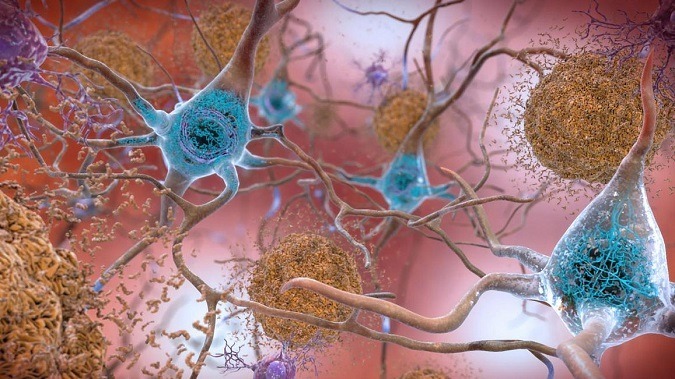
You may have heard that the brain is plastic.
As you well know. the brain is not made of plastic…Neuroplasticity, or brain plasticity, refers to the brain’s ability to CHANGE throughout life.
The human brain has the amazing ability to reorganize itself by forming new connections between brain cells (neurons).
In addition to genetic factors, the environment in which a person lives, as well as the actions of each person, play a significant role in plasticity.
Neuroplasticity occurs in the brain…
1- At the beginning of life: when the immature brain organizes itself.
2- In case of brain injury: to compensate for lost functions or maximize remaining functions.
3- Through adulthood: whenever something new is learned and memorized
Plasticity, learning and memory
For a long time, it was believed that as we aged, the connections in the brain became fixed, and then simply faded. Research has shown that in fact the brain never stops changing through learning. Plasticity is the capacity of the brain to change with learning.
Changes associated with learning occur mostly at the level of connections between neurons: New connections form and the internal structure of the existing synapses change. Did you know that when you become an expert in a specific domain, the areas in your brain that deal with this type of skill will grow?
For instance, London taxi drivers have a larger hippocampus (in the posterior region) than London bus drivers. Why is that? It is because this region of the hippocampus is specialized in acquiring and using complex spatial information in order to navigate efficiently. Taxi drivers have to navigate around London whereas bus drivers follow a limited set of routes.
Plasticity can also be observed in the brains of bilinguals. It looks like learning a second language is possible through functional changes in the brain: the left inferior parietal cortex is larger in bilingual brains than in monolingual brains.
Plastic changes also occur in musicians brains compared to non-musicians. Gaser and Schlaug compared professional musicians (who practice at least 1hour per day) to amateur musicians and non-musicians. They found that gray matter (cortex) volume was highest in professional musicians, intermediate in amateur musicians, and lowest in non-musicians in several brain areas involved in playing music: motor regions, anterior superior parietal areas and inferior temporal areas.
Finally, Draganski and colleagues recently showed that extensive learning of abstract information can also trigger some plastic changes in the brain. They imaged the brains of German medical students 3 months before their medical exam and right after the exam and compared them to brains of students who were not studying for exam at this time. Medical students’ brains showed learning-induced changes in regions of the parietal cortex as well as in the posterior hippocampus. These regions of the brains are known to be involved in memory retrieval and learning.
Plasticity and brain injury
A surprising consequence of neuroplasticity is the fact that the brain activity associated with a given function can actually move to a different location as a consequence of experience or brain damage.
In his book “The Brain That Changes Itself: Stories of Personal Triumph from the Frontiers of Brain Science,” Norman Doidge describes numerous examples of functional shifts. In one of them, a surgeon in his 50s suffers a stroke. His left arm is paralyzed. During his rehabilitation, his good arm and hand are immobilized, and he is set to cleaning tables. The task is at first impossible. Then slowly the bad arm remembers how too move. He learns to write again, to play tennis again: the functions of the brain areas killed in the stroke have transferred themselves to healthy regions!
The brain compensates for damage by reorganizing and forming new connections between intact neurons. In order to reconnect, the neurons need to be stimulated through activity.
Finally, let me address a couple of questions we often get…
Can new neurons grow in my brain?
Yes, and regardless of how young or old you are. Here’s a good article.
Can you recommend a good book to learn more about neuroplasticity and how to harness it for good?
Indeed. We published The SharpBrains Guide to Brain Fitness: How to Optimize Brain Health and Performance at Any Age precisely to provide a useful entry point into all this research and how to apply it. And we’re happy to report that it’s getting rave reviews!
Share this:

31 Comments
About SharpBrains
Top Articles on Brain Health and Neuroplasticity
Top 10 Brain Teasers and Illusions
Got the book?

the brain can retrain itself be changing its blumbing, when given direction via a biofeedback system operating on EEG measurements
Very interesting findings. Can you explain to me the following puzzle?
I have been suffering from depression since 1987 and have been taking drugs up to now, but nothing refrained from learning languages. I speak Arabic my mother language, French, and English fluently. I lived I. Germany for one year and I have never taken any courses in German, but I speak and understand German
Thank you for sharing; great post. Learning can indeed change our brain chemistry, how we think and behave in general. Afterall, learning is another way of educating ourselves and get a better and more informed perspective on life. In addition to learning, healthy nutrition can also improve learning overall cognitive performance. A healthy mind in a healthy body :). Thanks again
We are seeing currently a lot of breakthroughs in the field of neuroscience an the fact that the brain can adapt so well and heal itself gives hope in the 5 years we could finally take care of dementia related diseases.
Agreed! Not sure we’ll fully take care of dementia in 5 years but we will for sure be much better equipped to delay the onset and the quality-of-life consequences.
Things are moving fast in medicine at the moment I believe that we are near a turning point with the power of computers and how they allow us to sift trough data faster than ever before. So 5 years is a lot of time to see some serious advances in the fight against brain dysfunction.