

Memory training and attention deficits: interview with Notre Dame’s Bradley Gibson
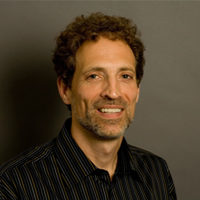 Professor Bradley Gibson is an Associate Professor in the Department of Psychology at University of Notre Dame, and Director of the Perception and Attention Lab there. He is a cognitive psychologist with research interests in perception, attention, and visual cognition. Gibson’s research has been published in a variety of journals, including Journal of Experimental Psychology, Human Perception and Performance, Psychological Science, and Perception & Psychophysics.
In 2006 he conducted the first independent replication study based on the Cogmed Working Memory Training program we discussed with Dr. Torkel Klingberg.
A local newspaper introduced some preliminary results of the study Attention, please: Memory exercises reduce symptoms of ADHD. Some quotes from the articles:
- “The computer game has been shown to reduce ADHD symptoms in children in experiments conducted in Sweden, where it was developed, and more recently in a Granger school, where it was tested by psychologists from the University of Notre Dame.
- Fifteen students at Discovery Middle School tried RoboMemo during a five-week period in February and March, said lead researcher Brad Gibson
- As a result of that experience, symptoms of inattention and hyperactivity were both reduced, according to reports by teachers and parents, Gibson said.
- Other tests found significant improvement in “working memory”, a short-term memory function that’s considered key to focusing attention and controlling impulses.
- RoboMemo’s effectiveness is not as well established as medications, and it’s a lot more work than popping a pill.
- Gibson said Notre Dame’s study is considered preliminary because it involved a small number of students. Another limitation is that the study did not have a control group of students receiving a placebo treatment.
We feel fortunate to interview Dr. Gibson today.
Alvaro Fernandez (AF): Dr. Gibson, thanks for being with us. Could you first tell us about your overall research interests?
Dr. Bradley Gibson (BG): Thanks for giving me this opportunity. My primary research interest is Attention and Attentional control: how we prioritize information in order to process it without being overwhelmed by it. This is an executive function that helps each of us manage the tension between the outside environment and our self-directed preferences and goals. This is more complex than it sounds. For example, we must learn how to be focused on one task but be able to pay attention to the overall picture at the same time-you may be aware of Chandler’s experiment on in attentional blindness.
AF: Yes, we posted about that experiment recently. Let’s not talk too much about it, so readers can try it themselves here if they want. Now, tell us about the Attention Lab, we understand it is nicely multi-disciplinary.
BG: It is. We have 5 graduate students, and work together with Prof. Dawn Gondoli, who studies development psychology and socioemotional development. We want to bridge a number of domains to better explain the transition from childhood to adolescence. We are interested in how kids develop cognitive and executive functions. ADD/ ADHD is an extreme case where the normal development trajectory does not apply.
AF: Tell us about ADD/ ADHD and development trajectories.
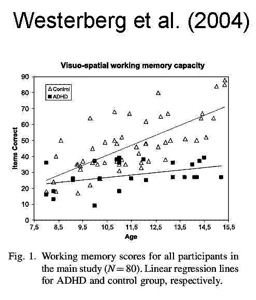 BG: There is a very insightful study by Walter Mischel on pre-schoolers aged 4 and 5. Some of them had a better ability to control their attention and delay gratification (measured as the capacity not to immediately eat a marshmallow but to wait for a larger posterior reward), and those kids were shown, 14 years later, to be happier, have better overall school grades, score around 200 points higher in the SAT, and, when tested, display better executive functioning overall.
The study showed that there are individual differences at very young ages-and the important implications from this fact. Now, the part that I consider more exciting is that these differences are not fixed. Training is very important: attentional control is one of the last cognitive abilities to develop in normal brain development and, as Prof. Daniel Gopher’s research has shown, can be trained at any age. What we are studying is how to help kids that for one reason or another start from a bad development trajectory get into a more positive one as quickly as possible. This is why we contacted Cogmed to conduct a small replication study of their Working Memory Training program. We wanted to see if we can enhance, accelerate, the development of working memory and executive functioning.
AF: we could see this as a “snowball” effect. If kids are well-equipped to engage in a number of demanding activities, they will, and will only get better at them. If they struggle with them, they will not participate, and not “exercise” those muscles so the gap will only grow. What did the replication study show?
BG: The “snowball” metaphor is a good one. The study we conducted was a small one and we did not have a control group, so it was not as rigorous as the original research conducted by Dr. Kingberg and the Karolinska Institute. However, the results were very positive. Even better than the original results. We saw that Cogmed working memory training led to cognitive improvements-increased verbal working memory and abstract reasoning (measured by Ravens)- and, more importantly, to the reduction in ADHD symptoms as measured both by parent and teacher ratings. The study has been accepted for presentation by the Society for Research in Child Development. I will present the results at their conference in Boston in March.
AF: Please send us the paper when ready. Now, working memory is a very important cognitive ability for all of us. What other applications can you envision for well-designed and structured working memory programs?
BG: I can easily see the relevance in 2 fields. One, professional sports. Two, military training. The Army’s Build Better Soldier initiative is very interested in developing resistance and in cognitive enhancements. This would be a natural enhancement, free of secondary and unexpected side-effects of other interventions such as drugs and brain implants. We are right now conducting another study, this one focused on working memory training for healthy college students, to see if the intervention can also be relevant to non-ADD/ ADHD populations and could then be of interest for the Army.
AF: Professor Gibson, many thanks for being with us. You are doing a lot of interesting work, please keep up in the loop.
BG: the pleasure has been mine. I hope to talk to you soon.
——————————-
To learn more about Cogmed Working Memory Training and RoboMemo.
Other interviews in our Neuroscience Interview Series:
Share this:

2 Comments
About SharpBrains
Top Articles on Brain Health and Neuroplasticity
Top 10 Brain Teasers and Illusions
Got the book?
Thanks for this post. I’m extremely interested in this program. What a wonderful thought — to be able to offer parents an effective treatment for ADHD that does not involve medicating their children. Exciting stuff!
Hi Alison, yes, this is very exciting…but it is not a treatment for ADHD. Kids with working memory deficits benefit from it, but not everyone with attention deficits needs this specific intervention. There is a screening upfront to identify who may benefit. And it is not a “treatment” because ADD/ ADHD may involve a number of problems and this approach doesn’t claim to solve all.
Regards