Sharp Brains: Brain Fitness and Cognitive Health News

Neuroplasticity, Brain Fitness and Cognitive Health News

Update: Time to become mental capitalists and invest in our brains?

Time for the Novem­ber edi­tion of the monthly Sharp­Brains eNewslet­ter, fea­tur­ing a wealth of resources and insights on how to invest in our brains, includ­ing top­ics such as brain health, med­i­ta­tion, neu­ropsy­chol­ogy, brain train­ing games, chemo brain, dyslexia, neu­ro­plas­tic­ity, cog­ni­tive biases, stress, and more. Not to for­get a cou­ple of fun teasers. Enjoy!

Brain Fit­ness Q&A Sessions:

The Big Picture:

New Research:

New Books:

Brain Teasers:

Thank you for your inter­est and atten­tion and have a great December.

A Course Correction for Positive Psychology: A Review of Martin Seligman’s Latest Book
(Editor’s Note: we are pleased to bring you this arti­cle thanks to our col­lab­o­ra­tion with Greater Good Sci­ence Cen­ter).

A Course Cor­rec­tion for Pos­i­tive Psychology

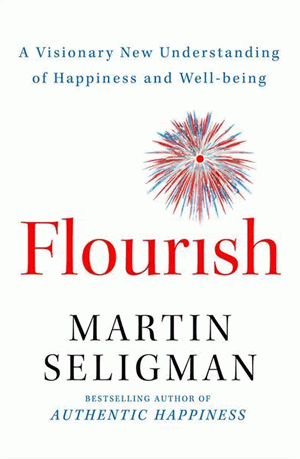
A review of Mar­tin Seligman’s lat­est book, Flour­ish: A Vision­ary New Under­stand­ing of Hap­pi­ness and Well-Being.

- By Jill Suttie

As pres­i­dent of the Amer­i­can Psy­cho­log­i­cal Asso­ci­a­tion in 1998, Mar­tin Selig­man chal­lenged the psy­cho­log­i­cal com­mu­nity to rad­i­cally change its approach. For too long, he charged, psy­chol­ogy had been pre­oc­cu­pied solely with reliev­ing symp­toms of men­tal ill­ness; instead, he believed it should explore how to thrive in life, not just sur­vive it. He called for a psy­chol­ogy that would uncover what makes peo­ple cre­ative, resilient, opti­mistic, and, ulti­mately, happy. The “pos­i­tive psy­chol­ogy” move­ment was born.

Yet in his lat­est book, Flour­ish, Selig­man tries to pro­vide some­thing of a course cor­rec­tion for pos­i­tive psy­chol­ogy. Read the rest of this entry »

Gabrielle Giffords’ recovery and Cognitive Rehab Insurance Coverage Gap

Gif­fords’ recov­ery renews focus on cov­er­age gap for vet­er­ans (Miami Herald):

- “Doc­tors and reha­bil­i­ta­tion spe­cial­ists have learned a great deal from the treat­ment of trau­matic brain injuries in com­bat vet­er­ans of Iraq and Afghanistan. One in five vet­er­ans of those wars has suf­fered some form of trau­matic brain injury, most com­monly con­cus­sions from road­side bombs.”

- “Yet vet­er­ans’ health care doesn’t con­sis­tently cover cog­ni­tive reha­bil­i­ta­tion ther­apy, the same ther­apy that’s helped Gif­fords and other well-known fig­ures — such as Sen. Tim John­son of South Dakota and ABC News cor­re­spon­dent Bob Woodruff — get their lives back to nor­mal after major brain traumas.”

- “Cog­ni­tive reha­bil­i­ta­tion can include speech and com­mu­ni­ca­tion ther­a­pies, and ther­a­pies to boost mem­ory and social skills and relearn rou­tine tasks such as get­ting dressed and shop­ping at the gro­cery store.”

Related resources:

Can Brain Fitness Innovation Enhance Cognitive Rehab and Driving Safety?
Today we share must-read insights from  Kather­ine Sul­li­van, Direc­tor of the Brain Fit­ness Cen­ter at Wal­ter Reed Army Med­ical Cen­ter, and Peter Kissinger, Pres­i­dent of the AAA Foun­da­tion for Traf­fic Safety. Both of them will dis­cuss their ongo­ing work and lessons learned at the upcom­ing 2011 Sharp­Brains Sum­mit (March 30th — April 1st, 2011). The inter­views below were con­ducted via email.

Kather­ine Sul­li­van is the Direc­tor of the Brain Fit­ness Cen­ter at Wal­ter Reed Army Med­ical Center.

1. Kather­ine, how would you define “brain fit­ness” vs. “phys­i­cal fitness”?

In our con­text (help­ing active duty ser­vice mem­bers and vet­er­ans recover from cog­ni­tive dys­func­tion most asso­ci­ated with trau­matic brain injury), I’d say brain fit­ness is the out­come we work towards: the cog­ni­tive resources required to return to duty or rein­te­grate into daily and pro­fes­sional lives as much as pos­si­ble. In this sense, Read the rest of this entry »

Top Articles on Brain, Cognition and Neuroplasticity

  1. Do you believe these neu­romyths?, by SharpBrains
  2. Brain Plas­tic­ity: How learn­ing changes your brain, by Pas­cale Michelon
  3. In the Age of Google, Should Schools Teach Mem­o­riza­tion Skills?, by Bill Klemm
  4. Does cog­ni­tive train­ing work? (For Whom? For What?), by Pas­cale Michelon
  5. The Emo­tional Life of Your Brain, by by Richard David­son, Sharon Begley
  6. Cur­rent State of the Sci­ence behind Neu­ro­feed­back Treat­ment for ADHD, by David Rabiner
  7. To Be (Your Con­nec­tome), or Not to Be (Your Genome), by Sebas­t­ian Seung
  8. Top 10 Brain Fit­ness Future Trends, by Alvaro Fernandez
  9. Biofeed­back now a “Level 1 — Best Sup­port” Inter­ven­tion for ADHD, by SharpBrains
  10. When 1 + 1 = 5: Dyscal­cu­lia and Work­ing Mem­ory, by Tracy Alloway
  11. Train­ing Atten­tion and Emo­tional Self-Regulation — Inter­view with Michael Pos­ner, by Alvaro Fernandez
  12. The Ten Habits of Highly Effec­tive Brains, by Alvaro Fernandez
  13. Why do You Turn Down the Radio When You’re Lost?, by Car­o­line Latham
  14. Brain fit­ness Q&A: Mem­ory, stress, emo­tions, by Alvaro Fernandez
  15. Cog­ni­tive ther­apy or med­ica­tion? Brain scans may help per­son­al­ize treat­ments, by SharpBrains
  16. New Study shows Teens with ADHD helped by Cog­ni­tive Behav­ioral Ther­apy, by David Rabiner
  17. How Do Words Change Our Brains and Lives?, by Andrew New­berg, Mark Waldman
  18. BBC “Brain Train­ing” Exper­i­ment: the Good, the Bad, the Ugly, by Alvaro Fernandez
  19. Sci­en­tific cri­tique of BBC/ Nature Brain Train­ing Exper­i­ment, by Liz Zelinski
  20. From Anti-Alzheimer’s “Magic Bul­lets” to True Brain Health, by Alvaro Fer­nan­dez, Peter Whitehouse
  21. Why Agile Minds Deploy Both Ratio­nal and Intu­itive Problem-Solving, by Judith Tingley
  22. Why I Wrote The Woman Who Changed Her Brain, by Bar­bara Arrowsmith-Young
  23. The Busi­ness and Ethics of the Brain Fit­ness Boom, by Alvaro Fernandez
  24. Break­ing Down the Cog­ni­tion & Alzheimer’s Dis­ease Alpha­bet Soup, by Dharma Singh Khalsa
  25. Top 10 Quotes on Life­long Neu­ro­plas­tic­ity, by Alvaro Fernandez
  26. To Har­ness Neu­ro­plas­tic­ity, Start with Enthu­si­asm, by Helena Popovic
  27. Q&A with Yaakov Stern on Brain Reserve, Exer­cise, Cog­ni­tive Train­ing, Angry Birds, by Alvaro Fernandez
  28. It is Not Only Cars That Deserve Good Main­te­nance: Brain Care 101, by Alvaro Fernandez
  29. Eval­u­a­tion Check­list for Brain Fit­ness prod­ucts and games, by Alvaro Fernandez
  30. Mind­ful­ness and Med­i­ta­tion in Schools for Stress Man­age­ment, by Jill Sutie
  31. Stress and Neural Wreck­age: Part of the Brain Plas­tic­ity Puz­zle, by Gre­gory Kellet
  32. Cog­ni­tive and Emo­tional Devel­op­ment Through Play, by David Elkind
  33. AARP’s Brain Fit­ness Best Books List, by SharpBrains
  34. Judith Beck: Train Your Brain to Think Like a Thin Per­son, by Alvaro Fernandez
  35. Improve Mem­ory with Sleep, Prac­tice, and Test­ing, by Bill Klemm
  36. 10 Brain Tips To Teach and Learn, by Lau­rie Bartels
  37. Dr. Elkhonon Gold­berg on Cog­ni­tive Train­ing and Brain Fit­ness, by Alvaro Fernandez
  38. Mind­ful­ness Med­i­ta­tion for Adults & Teens with ADHD, by David Rabiner
  39. Phys­i­cal Exer­cise and Brain Health, by Pas­cale Michelon
  40. Sleep, Tetris, Mem­ory and the Brain, by Shan­non Moffet

Welcome to SharpBrains.com

As seen in The New York Times, The Wall Street Jour­nal, CNN and more, Sharp­Brains is an inde­pen­dent mar­ket research and think tank track­ing health, edu­ca­tion, and pro­duc­tiv­ity appli­ca­tions of neuroscience.

Register Now at Discounted Rates

2013 SharpBrains Summit

Watch 10 Predictions on Digital Brain Health in 2013 (3 minutes)

Cover_video
Enter Your Email and Sub­scribe to our free Monthly eNewslet­ter:
Join more than 40,000 Sub­scribers and stay informed and engaged.

Follow Us Via…

twitter_logo_header