Sharp Brains: Brain Fitness and Cognitive Health News

Neuroplasticity, Brain Fitness and Cognitive Health News

Why, to improve memory, we need to think of the brain as a system
(Editor’s Note: every month we host an online Q&A with par­tic­i­pants in the e-course How To Be Your Own Brain Fit­ness Coach. This is the lightly edited and anonymized tran­script from the Jan­u­ary Q&A ses­sion; the Feb­ru­ary Q&A will take place on Tues­day, Feb­ru­ary 12th)

2:02
OK, ready to go! Happy 2013 again. You can start writ­ing your ques­tions and com­ments in the box at the bot­tom, and hit Send.

2:04
Ques­tion 
Which activ­i­ties or games or web­sites do you rec­om­mend to improve mem­ory? Read the rest of this entry »

Protect Your Asset by Being Your Own Brain Fitness Coach

Last week I had the good for­tune of spend­ing four days in Nuevo Val­larta, Mex­ico, with over 300 amaz­ing indi­vid­u­als from 40+ coun­tries who had been named Young Global Lead­ers by the World Eco­nomic Forum. The sum­mit agenda was insight­ful and inspir­ing, con­ver­sa­tions with other par­tic­i­pants always proved to be eye-opening and stim­u­lat­ing, and the over­all atmos­phere was con­struc­tive. You can read more about some of those con­ver­sa­tions here.

What I’d like to high­light in this arti­cle is the remark­able (and optional) activ­ity that started off every day at 7 in the morn­ing. Called “Pro­tect Your Asset” Read the rest of this entry »

Transcript: Alvaro Fernandez on Brain Health and Non-invasive Cognitive Enhancement

Below you can find the full tran­script of our engag­ing Q&A ses­sion yes­ter­day on life­long cog­ni­tive fit­ness, “men­tal cap­i­tal­ism”, and more,  with Alvaro Fer­nan­dez, co-author of The Sharp­Brains Guide to Brain Fit­ness, mod­er­ated by Harry Moody, Direc­tor of Aca­d­e­mic Affairs at AARP.

Read the rest of this entry »

Brain Fitness: Definition, Priorities, and Links to Neuroleadership and Human Capital
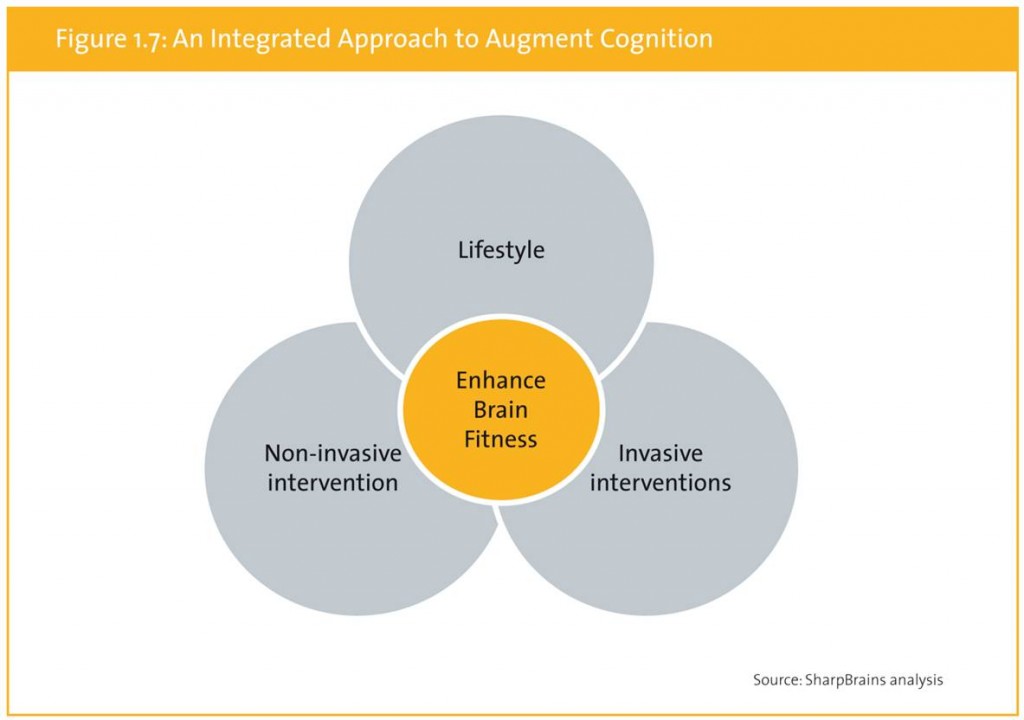
Yes­ter­day we had a fun ses­sion on Brain Fit­ness dur­ing the Neu­rolead­er­ship Sum­mit tak­ing place now in San Fran­cisco, explor­ing oppor­tu­ni­ties to enhance per­for­mance and health of lead­ers and work­forces by deploy­ing both old tools (like breath­ing and med­i­ta­tion) and new ones (such as biofeed­back and database-driven per­son­al­ized brain train­ing solu­tions). Here are a cou­ple of the main ideas I wanted to introduce:

A. Let’s define Brain Fit­ness as an “inte­grated approach to enhance brain func­tion­al­ity”, com­bin­ing as appro­pri­ate lifestyle, inva­sive and non-invasive options. “Brain fit­ness” is above all an out­come, a cul­ture, sim­i­lar to “phys­i­cal fit­ness” (jok­ingly, I also said that “brain fit­ness” is the part of “phys­i­cal fit­ness” that “phys­i­cal fit­ness” doesn’t yet know what to do with)

B. Then, the ques­tion becomes, “what are the most impor­tant brain func­tions to enhance/ develop/ main­tain?”. Here I shared the fol­low­ing results Read the rest of this entry »

IntelliGym cognitive simulation for Ice Hockey players

Very inter­est­ing new mar­ket devel­op­ment:

The Marker, Israel - Oct 28, 2008, Sharp­Brains,

In other words, Applied Cog­ni­tive Engi­neer­ing (ACE) and USA Hockey have part­nered to bring to mar­ket a cog­ni­tive sim­u­la­tion game to improve the per­for­mance of ice hockey play­ers — sim­i­lar to what  ACE has been offer­ing to pro­fes­sional and ama­teur bas­ket­ball players.

ACE has raised $2.5M, and ACE and USA Hockey have received a joint $800k devel­op­ment grant from the BIRD Foun­da­tion for the co-development of a train­ing sys­tem for Ice Hockey play­ers. (The arti­cle men­tions Sharp­Brains’ Mar­ket Report as a sign of how the mar­ket is grow­ing, since we cover ACE).

For more con­text on cog­ni­tive sim­u­la­tions, you will enjoy this Inter­view with Prof. Daniel Gopher:

Alvaro Fer­nan­dez: Tell us a bit about your over­all research interests.

Daniel Gopher: My main inter­est has been how to expand the lim­its of human atten­tion, infor­ma­tion pro­cess­ing and response capa­bil­i­ties which are crit­i­cal in com­plex, real-time decision-making, high-demand tasks such as fly­ing a mil­i­tary jet or play­ing pro­fes­sional bas­ket­ball. Using a ten­nis anal­ogy, my goal has been, and is, how to help develop many “Wimbledon-like cham­pi­ons. Each with their own styles, but per­form­ing to their max­i­mum capac­ity to suc­ceed in their environments.

What research over the last 15–20 years has shown is that cog­ni­tion, or what we call think­ing and per­for­mance, is really a set of skills that we can train sys­tem­at­i­cally. And Read the rest of this entry »

Brain Health: Physical or Mental Exercise?

Our fel­low blog­ger Jeremy over at Psy­Blog has writ­ten a thought­ful post com­par­ing the value of a num­ber of cog­ni­tive enhanc­ing tools. His over­all verdict?

The evi­dence for exer­cise boost­ing cog­ni­tive func­tion is head-and-shoulders above that for brain train­ing, drugs, nutri­tional sup­ple­ments and med­i­ta­tion. Sci­en­tif­i­cally, on the cur­rent evi­dence, exer­cise is the best way to enhance your cog­ni­tive func­tion. And as for its side-effects: yes there is the chance of an injury but exer­cise can also reduce weight, lower the chance of demen­tia, improve mood and lead to a longer life-span. Damn those side-effects!”

Arti­cle: Which Cog­ni­tive Enhancers Really Work: Brain Train­ing, Drugs, Vit­a­mins, Med­i­ta­tion or Exercise?

Jeremy, I started writ­ing this as a com­ment to your post in your blog, but then it got too long. Let me write my reac­tion to your post here.

While I appre­ci­ate your analy­sis and share most of your points, I think the “rank­ing” effort (this type of inter­ven­tion is bet­ter than that one) is ulti­mately mis­lead­ing.  It is Rubik's Cube brain exercisebased on a faulty search for a gen­eral solution/ magic pill for every­one and everything.

If only things were so sim­ple. Per­haps one day there will be research to sup­port that view, but cer­tainly not today. A num­ber of inter­ven­tions have shown their value. In dif­fer­ent pop­u­la­tions, and con­texts. For “exer­cise is the best way to enhance your cog­ni­tive func­tion” to be true, one needs to have a pretty spe­cific under­stand­ing of “best”, “your” and “cog­ni­tive function”.

Read the rest of this entry »

Brain Health Business Grows With Research and Demand

I wrote this arti­cle for the March/ April edi­tion of the pub­li­ca­tion Aging Today, pub­lished by the Amer­i­can Soci­ety on Aging, and received per­mis­sion to repro­duce it here.

—————-

In recent years, most pro­fes­sion­als in aging have become aware of the grow­ing sci­en­tific evi­dence show­ing that human brains retain the abil­ity to gen­er­ate neu­rons and change over a life­time, dis­cov­er­ies that have bro­ken the sci­en­tific par­a­digm preva­lent dur­ing the 20th cen­tury. Fur­ther­more, neu­roimag­ing and cog­ni­tive train­ing stud­ies are show­ing how well-directed exer­cise presents peo­ple major oppor­tu­ni­ties for healthy brain aging.

How can peo­ple use emerg­ing tech­nolo­gies to keep their brains healthy and pro­duc­tive as long as pos­si­ble? An emerg­ing mar­ket for brain health– $225 mil­lion mar­ket in 2007, in the United States alone, of which con­sumers account for $80 million–is try­ing to address that ques­tion in a way that com­ple­ments other impor­tant more tra­di­tional pil­lars (and multi-billion indus­tries) of brain health, such as phys­i­cal exer­cise, bal­anced diet, stress man­age­ment (stress has been shown to actu­ally kill neu­rons and reduce the rate of cre­ation of new ones) and over­all men­tal stim­u­la­tion and life­long learning.

2007 AN ACTIVE YEAR

A series of impor­tant events took place in 2007, a sem­i­nal year for the brain health field, begin­ning in Jan­u­ary when many main­stream media pub­li­ca­tions, such as Time Mag­a­zine and CBS News, started to pub­lish major sto­ries on neu­ro­plas­tic­ity and brain exer­cise. This media cov­er­age fol­lowed the pub­li­ca­tion of the long-awaited results from national clin­i­cal tri­als show­ing that sig­nif­i­cant per­cent­ages of the par­tic­i­pants age 65 and older who trained for five weeks improved their mem­ory, rea­son­ing and information-processing speed. Find­ings from the Advanced Cog­ni­tive Train­ing for Inde­pen­dent and Vital Elderly (ACTIVE) Study appeared in the Jour­nal of the Amer­i­can Med­ical Asso­ci­a­tion (Dec. 20, 2006) and revealed that even after five years, par­tic­i­pants in the ACTIVE computer-based pro­gram showed less of a decline in information-processing skills than those in a con­trol group that received no cog­ni­tive training.

Read the rest of this entry »

Top Articles on Brain, Cognition and Neuroplasticity

  1. Do you believe these neu­romyths?, by SharpBrains
  2. Brain Plas­tic­ity: How learn­ing changes your brain, by Pas­cale Michelon
  3. In the Age of Google, Should Schools Teach Mem­o­riza­tion Skills?, by Bill Klemm
  4. Does cog­ni­tive train­ing work? (For Whom? For What?), by Pas­cale Michelon
  5. The Emo­tional Life of Your Brain, by by Richard David­son, Sharon Begley
  6. Cur­rent State of the Sci­ence behind Neu­ro­feed­back Treat­ment for ADHD, by David Rabiner
  7. To Be (Your Con­nec­tome), or Not to Be (Your Genome), by Sebas­t­ian Seung
  8. Top 10 Brain Fit­ness Future Trends, by Alvaro Fernandez
  9. Biofeed­back now a “Level 1 — Best Sup­port” Inter­ven­tion for ADHD, by SharpBrains
  10. When 1 + 1 = 5: Dyscal­cu­lia and Work­ing Mem­ory, by Tracy Alloway
  11. Train­ing Atten­tion and Emo­tional Self-Regulation — Inter­view with Michael Pos­ner, by Alvaro Fernandez
  12. The Ten Habits of Highly Effec­tive Brains, by Alvaro Fernandez
  13. Why do You Turn Down the Radio When You’re Lost?, by Car­o­line Latham
  14. Brain fit­ness Q&A: Mem­ory, stress, emo­tions, by Alvaro Fernandez
  15. Cog­ni­tive ther­apy or med­ica­tion? Brain scans may help per­son­al­ize treat­ments, by SharpBrains
  16. New Study shows Teens with ADHD helped by Cog­ni­tive Behav­ioral Ther­apy, by David Rabiner
  17. How Do Words Change Our Brains and Lives?, by Andrew New­berg, Mark Waldman
  18. BBC “Brain Train­ing” Exper­i­ment: the Good, the Bad, the Ugly, by Alvaro Fernandez
  19. Sci­en­tific cri­tique of BBC/ Nature Brain Train­ing Exper­i­ment, by Liz Zelinski
  20. From Anti-Alzheimer’s “Magic Bul­lets” to True Brain Health, by Alvaro Fer­nan­dez, Peter Whitehouse
  21. Why Agile Minds Deploy Both Ratio­nal and Intu­itive Problem-Solving, by Judith Tingley
  22. Why I Wrote The Woman Who Changed Her Brain, by Bar­bara Arrowsmith-Young
  23. The Busi­ness and Ethics of the Brain Fit­ness Boom, by Alvaro Fernandez
  24. Break­ing Down the Cog­ni­tion & Alzheimer’s Dis­ease Alpha­bet Soup, by Dharma Singh Khalsa
  25. Top 10 Quotes on Life­long Neu­ro­plas­tic­ity, by Alvaro Fernandez
  26. To Har­ness Neu­ro­plas­tic­ity, Start with Enthu­si­asm, by Helena Popovic
  27. Q&A with Yaakov Stern on Brain Reserve, Exer­cise, Cog­ni­tive Train­ing, Angry Birds, by Alvaro Fernandez
  28. It is Not Only Cars That Deserve Good Main­te­nance: Brain Care 101, by Alvaro Fernandez
  29. Eval­u­a­tion Check­list for Brain Fit­ness prod­ucts and games, by Alvaro Fernandez
  30. Mind­ful­ness and Med­i­ta­tion in Schools for Stress Man­age­ment, by Jill Sutie
  31. Stress and Neural Wreck­age: Part of the Brain Plas­tic­ity Puz­zle, by Gre­gory Kellet
  32. Cog­ni­tive and Emo­tional Devel­op­ment Through Play, by David Elkind
  33. AARP’s Brain Fit­ness Best Books List, by SharpBrains
  34. Judith Beck: Train Your Brain to Think Like a Thin Per­son, by Alvaro Fernandez
  35. Improve Mem­ory with Sleep, Prac­tice, and Test­ing, by Bill Klemm
  36. 10 Brain Tips To Teach and Learn, by Lau­rie Bartels
  37. Dr. Elkhonon Gold­berg on Cog­ni­tive Train­ing and Brain Fit­ness, by Alvaro Fernandez
  38. Mind­ful­ness Med­i­ta­tion for Adults & Teens with ADHD, by David Rabiner
  39. Phys­i­cal Exer­cise and Brain Health, by Pas­cale Michelon
  40. Sleep, Tetris, Mem­ory and the Brain, by Shan­non Moffet

Welcome to SharpBrains.com

As seen in The New York Times, The Wall Street Jour­nal, CNN and more, Sharp­Brains is an inde­pen­dent mar­ket research and think tank track­ing health, edu­ca­tion, and pro­duc­tiv­ity appli­ca­tions of neuroscience.

Register Now at Discounted Rates

2013 SharpBrains Summit

Watch 10 Predictions on Digital Brain Health in 2013 (3 minutes)

Cover_video
Enter Your Email and Sub­scribe to our free Monthly eNewslet­ter:
Join more than 40,000 Sub­scribers and stay informed and engaged.

Follow Us Via…

twitter_logo_header