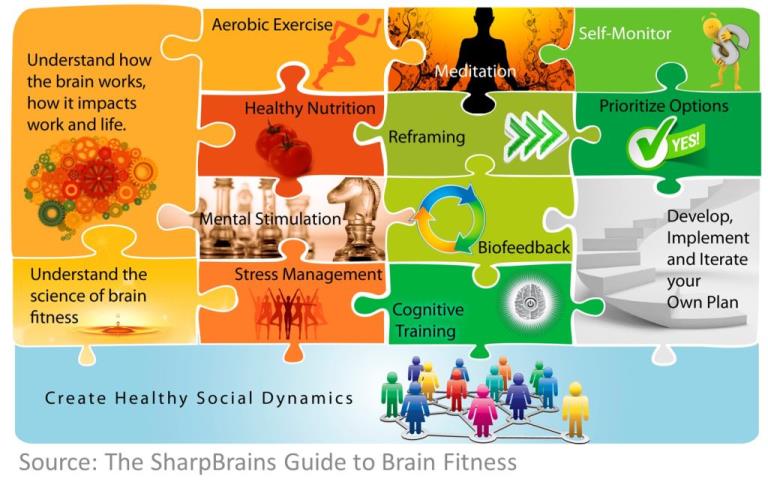
Sharp Brains: Brain Fitness and Cognitive Health News

Neuroplasticity, Brain Fitness and Cognitive Health News

Retooling cognitive rehabilitation for patients with traumatic brain injury

Our col­league Kate Sul­li­van, who led a superb Sharp­Brains Vir­tual Sum­mit work­shop on How to Set Up a Brain Fit­ness Cen­ter to Enhance Cog­ni­tive Retrain­ing and Reha­bil­i­ta­tion, based on her expe­ri­ence at Wal­ter Reed National Mil­i­tary Med­ical Cen­ter, just alerted us of a new study pre­pared by her team: Out­comes from a Pilot Study using Computer-Based Reha­bil­i­ta­tive Tools in a Mil­i­tary Pop­u­la­tion (Stud­ies in Health Tech­nol­ogy and Infor­mat­ics). Read the rest of this entry »

The Business and Ethics of the Brain Fitness Boom — Part 1: The Business
The recent dis­cov­ery that expe­ri­ence can change brain struc­ture and func­tion at any age has sparked numer­ous health, edu­ca­tion, and pro­duc­tiv­ity appli­ca­tions whose value and lim­i­ta­tions we are only start­ing to grasp.

Brain fit­ness has quickly become a main­stream aspi­ra­tion among baby boomers and elders, pri­mar­ily in North Amer­ica. It has fueled a grow­ing inter­est in brain fit­ness classes, brain fit­ness cen­ters, and brain fit­ness pro­grams, along with atten­dant oppor­tu­ni­ties and chal­lenges. An increas­ing num­ber of adults want use­ful tools to pro­tect cog­ni­tive health and performance—not nec­es­sar­ily to reverse aging—and what they are find­ing is an expand­ing and noisy mar­ket­place where they (and also pro­fes­sion­als) need to care­fully eval­u­ate their own needs and the avail­able options (Fer­nan­dez and Gold­berg, 2009). Read the rest of this entry »

Announcing Sponsors and Partners: 2011 SharpBrains Summit

We are hon­ored to announce the fol­low­ing Spon­sors and Part­ners of the upcom­ing 2011 Sharp­Brains Sum­mit: Retool­ing Brain Health for the 21st Cen­tury (March 30th — April 1st, 2011). And we are look­ing for more, so please con­tact us if inter­ested! Read the rest of this entry »

Can Brain Fitness Innovation Enhance Cognitive Rehab and Driving Safety?
Today we share must-read insights from  Kather­ine Sul­li­van, Direc­tor of the Brain Fit­ness Cen­ter at Wal­ter Reed Army Med­ical Cen­ter, and Peter Kissinger, Pres­i­dent of the AAA Foun­da­tion for Traf­fic Safety. Both of them will dis­cuss their ongo­ing work and lessons learned at the upcom­ing 2011 Sharp­Brains Sum­mit (March 30th — April 1st, 2011). The inter­views below were con­ducted via email.

Kather­ine Sul­li­van is the Direc­tor of the Brain Fit­ness Cen­ter at Wal­ter Reed Army Med­ical Center.

1. Kather­ine, how would you define “brain fit­ness” vs. “phys­i­cal fitness”?

In our con­text (help­ing active duty ser­vice mem­bers and vet­er­ans recover from cog­ni­tive dys­func­tion most asso­ci­ated with trau­matic brain injury), I’d say brain fit­ness is the out­come we work towards: the cog­ni­tive resources required to return to duty or rein­te­grate into daily and pro­fes­sional lives as much as pos­si­ble. In this sense, Read the rest of this entry »

Top 10 Brain Training Trends — Putting our Cognitive Reserve to Work

Yes­ter­day I had the chance to chat with Yaakov Stern, lead­ing Cog­ni­tive Reserve researcher at Colum­bia Uni­ver­sity, and then with a group of 25 life­long learn­ers in Ari­zona who attended a brain fit­ness class (hello, Robert and friends!) based on our con­sumer guide The Sharp­Brains Guide to Brain Fit­ness. On reflec­tion, I found both con­ver­sa­tions to be very stim­u­lat­ing for the same rea­son: they were forward-looking, focused not so much on sta­tus quo but on how emerg­ing research, tech­nol­ogy and trends may impact our soci­ety and lives in years to come. Let’s con­tinue the con­ver­sa­tion. Let me share the 10 main trends that we analyzed/ fore­casted in our book, and then ask you, sharp read­ers, to add your own 2 cents to the dis­cus­sion. Read the rest of this entry »

Computerized cognitive training may help reduce falls among elderly

Brain fit­ness pro­grams may help weak elderly walk faster (press release)

A study led by researchers at Albert Ein­stein Col­lege of Med­i­cine of Yeshiva Uni­ver­sity has found pre­lim­i­nary evi­dence that brain fit­ness pro­grams may help frail elderly walk faster, poten­tially pre­vent­ing dis­abil­ity and improv­ing qual­ity of life.

For walk­ing while talk­ing — which requires con­sid­er­ably more con­cen­tra­tion than nor­mal walk­ing — the seniors who took com­puter train­ing notably improved com­pared with their ini­tial speeds. By con­trast, no improve­ment in walk­ing speed was observed for the con­trol group.

Maintain Your Brain and Stay Sharp: An Upcoming Guide and Resource

You may be read­ing all about brain fit­ness and brain train­ing. It seems every week brings a new bar­rage of arti­cles and stud­ies which often con­tra­dict what you read the month before: Does Gingko Biloba help delay Alzheimer’s Dis­ease? Can phys­i­cal exer­cise help you stay sharp as you age? Which computer-based “brain fit­ness pro­grams”, if any, are worth your money?

All this cov­er­age reflects very excit­ing sci­en­tific find­ings but also poses a key dilemma: How to become an informed life­long learner and con­sumer when there are few and con­tra­dic­tory author­i­ta­tive guidelines?

The Sharp­Brains Guide to Brain Fit­ness (to be pub­lished in May 2009; $24.95) aims to fill that void. This guide is the result of over a year of exten­sive research includ­ing more than a hun­dred inter­views with sci­en­tists, pro­fes­sion­als and con­sumers, and a deep lit­er­a­ture review. Below you have some of the main find­ings from our effort. The guide not only cov­ers these aspects in more depth and offers prac­ti­cal guid­ance, but also includes 18 inter­views with promi­nent sci­en­tists to help you under­stand the research better.

Can we intro­duce you to your Brain?

The Guide will start at the obvi­ous start­ing point: The Human Brain. In order to make informed deci­sions about brain health, one needs to first under­stand the basic orga­ni­za­tion of the human brain and how it tends to change as we get older.

* The brain is com­posed of a num­ber of regions serv­ing dis­tinct func­tions. For­get IQ: our life and pro­duc­tiv­ity depend on a vari­ety of brain func­tions, not just one.

* There is noth­ing inher­ently fixed in the tra­jec­tory of how brain func­tions evolve as we age. Your lifestyle, actions, and even thoughts, do matter.

The 4 Pil­lars of Brain Maintenance

Neu­ro­plas­tic­ity is the life­long capac­ity of the brain to change and rewire itself in response to the stim­u­la­tion of learn­ing and expe­ri­ence. The lat­est sci­en­tific research shows that spe­cific lifestyles and actions can, no mat­ter our age, improve the health and level of func­tion­ing of our brains.

What fac­tors seem to have the most influ­ence? Read the rest of this entry »

Top Articles on Brain, Cognition and Neuroplasticity

  1. Do you believe these neu­romyths?, by SharpBrains
  2. Brain Plas­tic­ity: How learn­ing changes your brain, by Pas­cale Michelon
  3. In the Age of Google, Should Schools Teach Mem­o­riza­tion Skills?, by Bill Klemm
  4. Does cog­ni­tive train­ing work? (For Whom? For What?), by Pas­cale Michelon
  5. The Emo­tional Life of Your Brain, by by Richard David­son, Sharon Begley
  6. Cur­rent State of the Sci­ence behind Neu­ro­feed­back Treat­ment for ADHD, by David Rabiner
  7. To Be (Your Con­nec­tome), or Not to Be (Your Genome), by Sebas­t­ian Seung
  8. Top 10 Brain Fit­ness Future Trends, by Alvaro Fernandez
  9. Biofeed­back now a “Level 1 — Best Sup­port” Inter­ven­tion for ADHD, by SharpBrains
  10. When 1 + 1 = 5: Dyscal­cu­lia and Work­ing Mem­ory, by Tracy Alloway
  11. Train­ing Atten­tion and Emo­tional Self-Regulation — Inter­view with Michael Pos­ner, by Alvaro Fernandez
  12. The Ten Habits of Highly Effec­tive Brains, by Alvaro Fernandez
  13. Why do You Turn Down the Radio When You’re Lost?, by Car­o­line Latham
  14. Brain fit­ness Q&A: Mem­ory, stress, emo­tions, by Alvaro Fernandez
  15. Cog­ni­tive ther­apy or med­ica­tion? Brain scans may help per­son­al­ize treat­ments, by SharpBrains
  16. New Study shows Teens with ADHD helped by Cog­ni­tive Behav­ioral Ther­apy, by David Rabiner
  17. How Do Words Change Our Brains and Lives?, by Andrew New­berg, Mark Waldman
  18. BBC “Brain Train­ing” Exper­i­ment: the Good, the Bad, the Ugly, by Alvaro Fernandez
  19. Sci­en­tific cri­tique of BBC/ Nature Brain Train­ing Exper­i­ment, by Liz Zelinski
  20. From Anti-Alzheimer’s “Magic Bul­lets” to True Brain Health, by Alvaro Fer­nan­dez, Peter Whitehouse
  21. Why Agile Minds Deploy Both Ratio­nal and Intu­itive Problem-Solving, by Judith Tingley
  22. Why I Wrote The Woman Who Changed Her Brain, by Bar­bara Arrowsmith-Young
  23. The Busi­ness and Ethics of the Brain Fit­ness Boom, by Alvaro Fernandez
  24. Break­ing Down the Cog­ni­tion & Alzheimer’s Dis­ease Alpha­bet Soup, by Dharma Singh Khalsa
  25. Top 10 Quotes on Life­long Neu­ro­plas­tic­ity, by Alvaro Fernandez
  26. To Har­ness Neu­ro­plas­tic­ity, Start with Enthu­si­asm, by Helena Popovic
  27. Q&A with Yaakov Stern on Brain Reserve, Exer­cise, Cog­ni­tive Train­ing, Angry Birds, by Alvaro Fernandez
  28. It is Not Only Cars That Deserve Good Main­te­nance: Brain Care 101, by Alvaro Fernandez
  29. Eval­u­a­tion Check­list for Brain Fit­ness prod­ucts and games, by Alvaro Fernandez
  30. Mind­ful­ness and Med­i­ta­tion in Schools for Stress Man­age­ment, by Jill Sutie
  31. Stress and Neural Wreck­age: Part of the Brain Plas­tic­ity Puz­zle, by Gre­gory Kellet
  32. Cog­ni­tive and Emo­tional Devel­op­ment Through Play, by David Elkind
  33. AARP’s Brain Fit­ness Best Books List, by SharpBrains
  34. Judith Beck: Train Your Brain to Think Like a Thin Per­son, by Alvaro Fernandez
  35. Improve Mem­ory with Sleep, Prac­tice, and Test­ing, by Bill Klemm
  36. 10 Brain Tips To Teach and Learn, by Lau­rie Bartels
  37. Dr. Elkhonon Gold­berg on Cog­ni­tive Train­ing and Brain Fit­ness, by Alvaro Fernandez
  38. Mind­ful­ness Med­i­ta­tion for Adults & Teens with ADHD, by David Rabiner
  39. Phys­i­cal Exer­cise and Brain Health, by Pas­cale Michelon
  40. Sleep, Tetris, Mem­ory and the Brain, by Shan­non Moffet

Welcome to SharpBrains.com

As seen in The New York Times, The Wall Street Jour­nal, CNN and more, Sharp­Brains is an inde­pen­dent mar­ket research and think tank track­ing health, edu­ca­tion, and pro­duc­tiv­ity appli­ca­tions of neuroscience.

Register Now at Discounted Rates

2013 SharpBrains Summit

Watch 10 Predictions on Digital Brain Health in 2013 (3 minutes)

Cover_video
Enter Your Email and Sub­scribe to our free Monthly eNewslet­ter:
Join more than 40,000 Sub­scribers and stay informed and engaged.

Follow Us Via…

twitter_logo_header