

Brain teaser game to stimulate your temporal lobes
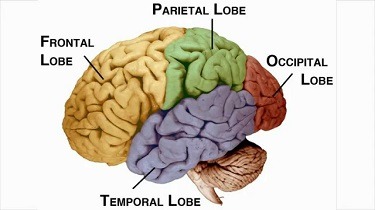 Do you know where words are stored in your brain?
In your temporal lobe!
As you know, the brain has two sides (two hemispheres) connected by the corpus callosum. So you have one temporal lobe on each side of the brain.
If you are right-handed, your language is stored mostly in your left temporal lobe. If you are left-handed, you are not so lateralized and your language is stored a bit on both sides of your brain in the temporal lobes.
Words in the brain are not stored randomly. They seemed to be quite organized. Research has shown that words that are often heard together (such as salt and pepper) or words that share some meaning (such as nurse and doctor) are connected or associated in the brain. Once you hear one, the other is activated.
Here is a mental exercise whose aim is to stimulate the connections or associations between words in your temporal lobe.
In the left column you have a pair of words. Your goal is to find a third word that is connected or associated with both of these two words.
The first pair is PIANO and LOCK. The answer is KEY. The word key is connected with both the word piano and the word lock: there are KEYS on a piano and you use a KEY to lock doors.
Key is what is called a homograph: a word that has more than one meaning but is always spelled the same.
Ready to stimulate connections in your temporal lobe(s)? Enjoy!
(Solutions are below. Please don’t check them until you have tried to solve all the pairs!)
1. LOCK — PIANO
2. SHIP — CARD
3. TREE — CAR
4. SCHOOL — EYE
5. PILLOW — COURT
6. RIVER — MONEY
7. BED — PAPER
8. ARMY — WATER
9. TENNIS — NOISE
10. EGYPTIAN — MOTHER
11. SMOKER — PLUMBER
 — This article was written by Pascale Michelon, Ph. D., for SharpBrains.com. Dr. Michelon has a Ph.D. in Cognitive Psychology and has worked as a Research Scientist at Washington University in Saint Louis, in the Psychology Department. She conducted several research projects to understand how the brain makes use of visual information and memorizes facts.
.
SOLUTIONS
1. LOCK — PIANO > KEY
2. SHIP — CARD > Deck
3. TREE — CAR > Trunk
4. SCHOOL — EYE > Pupil (Exam and Private are also possible)
5. PILLOW — COURT > Case
6. RIVER — MONEY > Bank (Flow is also possible)
7. BED — PAPER > Sheet
8. ARMY — WATER > Tank
9. TENNIS — NOISE > Racket
10. EGYPTIAN — MOTHER > Mummy
11. SMOKER — PLUMBER > Pipe
Next brain teaser:
- 14. Join this party for polyglots
Share this:

80 Comments
About SharpBrains
Top Articles on Brain Health and Neuroplasticity
Top 10 Brain Teasers and Illusions
Got the book?
For #8 I got BASE — I’m an artist and paints have a water base or an oil base.
Here are my answers:
1. key
2. deck
3. trunk
4. pupil
5. case
6. flow
7. roses [bed of roses and paper roses lol~]
8. boy [army boy, new recruit and water boy]
9.racket
10.mummy/mommy [i though homo-something should have the same spelling?]
11. filter [cigarette filter and faucet/pipe filters]
I’m not american… I’m asian and I don’t live outside my country…yet. Haha~
I had ‘butt’ for no. 11
:P
how about army/water navy ?
Imao I think board is also viable alternative answer to #2