By: SharpBrains

Below you can find the full transcript of our engaging Q&A session yesterday on holistic brain health with clinical neuropsychologist Dr. Paul Nussbaum, author of Save Your Brain. You can learn more about the full Brain Fitness Q&A Series Here.
Perhaps one of the best exchanges was: Read the rest of this entry »
By: Laurie Bartels
My interest in the brain stems from wanting to better understand both how to make school more palatable for students, and professional development more meaningful for faculty. To that end, I began my Neurons Firing blog in April, 2007, have been doing a lot of reading, and been attending workshops and conferences, including Learning & the Brain.
If you agree that our brains are designed for learning, then as educators it is incumbent upon us to be looking for ways to maximize the learning process for each of our students, as well as for ourselves. Some of what follows is simply common sense, but I’ve learned that all of it has a scientific basis in our brains. Read the rest of this entry »
By: Alvaro Fernandez
What a better opening for our January SharpBrains Summit than to have Marian C. Diamond, one of the pioneers of neuroplasticity research since the 1960s, introduce us to the human brain, its anatomy and function, and implications from neuroplasticity for brain health and performance at any age.
Marian C. Diamond, Ph.D., is Professor of Neuroscience and Anatomy at UC-Berkeley and one of the world’s foremost researchers on neuroplasticity and enrichment since the 1960s . She is author of more than 100 scientific articles and three books, including Enriching Heredity (Free Press/Simon and Schuster, 1988) and The Magic Trees of the Mind (Plume, 1999). In particular, she is interested in studying the effects of the external environment, aging, and immune responses on the cerebral neocortex.
You can read a number of her public education essays online:
To learn more
about the agenda of the SharpBrains Summit and the incredible roster of speakers who have agreed to participate in this important event, click on SharpBrains Summit.
By: Laurie Bartels
My natural rhythms are in cycle with the school calendar. January 1st takes a back seat to my new year, which gets ushered in with the month of September when there is crispness in the air that gradually shakes off the slower, more relaxed pace of summer.Conveniently, my career in teaching meshes with my natural cyclical year. And as this year draws to a close, I am re-energized by the pace of summer, knowing that anything may pop in to my mind as I engage in activities not directly related to school. But before that happens, I’d like to reflect on this past year, in particular as it was my first year of blogging about the brain.
My interest in the brain stems from wanting to better understand both how to make school more palatable for students, and professional development more meaningful for faculty. To that end, I began my Neurons Firing blog in April, 2007, have been doing a lot of reading, and been attending workshops and conferences, including Learning & the Brain.
If you agree that our brains are designed for learning, then Read the rest of this entry »
By: Alvaro Fernandez
We had the fortune to interview Dr. Brett Steenbarger on Enhancing Trader Performance and The Psychology of Trading as we launched our Neuroscience Interview Series.
Below, Expert Contributor Dr. Janice Dorn provides an in-depth brain-based discussion of the topic, concluding that “The brain is the most powerful structure in the known universe and the only trading tool that the trader needs to become an expert.”
No matter whether you are a Pro or Amateur Trader…this will certainly exercise your brain! (Dr. Dorn is preparing more articles on trading performance and the brain…so stay tuned).
This is Your Brain On Trading
– By Dr. Janice Dorn
The opening bell sounds, and sixty million traders enter the greatest arena in the world to do battle with each other. They put their money, beliefs and skills on the line as they make decisions to buy and sell. Welcome to the financial markets where billions of dollars are won and lost every day. Volatility compels all to engage their brains in the continuous process of decision making. What separates the winning from losing traders is the way they use their most powerful trading tool—the human brain.
Read the rest of this entry »
By: Dr. Bill Klemm
Over the last year we have gladly seen an avalanche of news on adult neurogenesis (the creation of new neurons in adult brains), following recent research reports. Further, we have seen how the news that physical exercise can enhance neurogenesis is becoming common knowledge among many health systems we work with.
Now, the obvious question that doesn’t always get asked is, “What good are new neurons if they don’t survive?”. And that’s where learning, enrichment, mental exercise, are critical.
We are glad to introduce a new Expert Contributor, Dr. Bill Klemm, a professor of Neuroscience at Texas A&M University, who summarizes much research on how new neurons are born-and what they need to live long happy lives.
- Alvaro
New Neurons: Good News, Bad News
– By Dr. Bill Klemm
In the last few years, researchers have discovered that new nerve cells (neurons) are born, presumably from residual stem cells that exist even in adults. That should be good news for all of us as we get older and fear mental decline. The bad news is that these new neurons die, unless our minds are active enough.
Read the rest of this entry »
By: Alvaro Fernandez
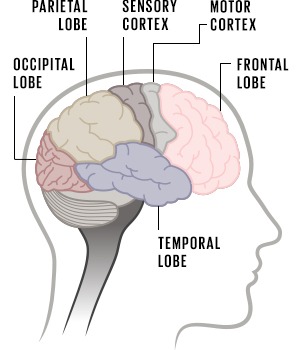
Who has not heard “Use It or Lose It”. Now, what is “It”? Last week I gave a talk at the Italian Consulate in San Francisco, and one of the areas attendants seemed to enjoy the most was learning about what our brains are and how they work, peaking into the “black box” of our minds. Without understanding at least the basics, how can we make good decisions about our own brain health and fitness?
Let’s review at a glance:
.
The brain is composed of 3 main sub-systems
The brain is composed of 3 “brains” or main sub-systems, each named after the evolutionary moment in which the sub-system is believed to have appeared. Read the rest of this entry »