

Posts Tagged ‘IQ’
On centenarians, memory, Mars, tDCS, ADHD, digital health, beautiful brains, and more

Welcome to a new edition of SharpBrains’ e‑newsletter, featuring ten timely resources and research findings for lifelong brain and mental fitness. #1. Let’s start with a fascinating story and study :-) Study with 330 centenarians finds that cognitive decline is not inevitable … (Henne Holstege, PhD, assistant professor at Amsterdam University Medical Center) said her interest in researching…
Read MoreReport calls for wide classroom-based adoption of ten brain fitness programs designed to improve foundational executive functions
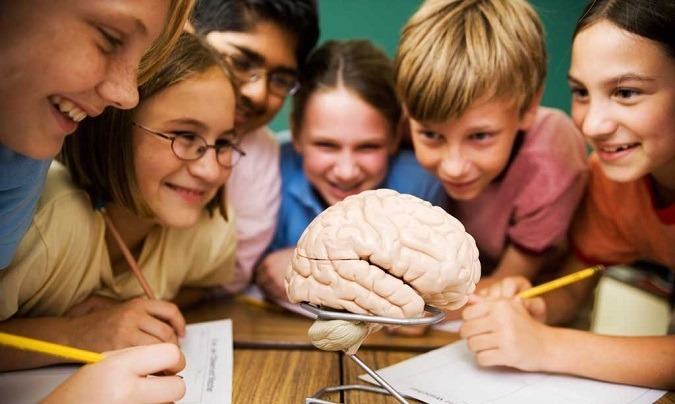
__________ National Nonprofit Releases Report Calling for Brain Fitness Interventions in All U.S. Schools (press release): “BrainFutures released a report today that makes a clear case for integrating proven brain fitness programs into all U.S. classrooms. Over a decade of research has shown that evidence-based programs can improve students’ executive function skills and prosocial behaviors,…
Read MoreIs your smartphone frying your brain? (Nope…but we better prevent constant distractions)
—– Is Your iPhone Really Frying Your Brain? Five Things You Need To Know (Forbes): “…since the announcement of the first iPhone ten years ago this week, concerns about devices turning their users into mindless drones seem to have reached a fever pitch. So is the internet really bad for your brain? Here’s what we…
Read MoreStudy: Early-childhood attention skills help predict long-term academic success better than IQ, socioemotional skills, or socioeconomic status

—– Which early child characteristics predict long-term academic achievement and educational attainment? Research has focused on the role of early academic skills, learning enhancing behaviors, and socioemotional competencies as precursors of academic success. Identifying the relative contribution of each to children’s long-term academic achievement is important as it can inform the skills on which early…
Read MoreBook review of Ungifted: Intelligence Redefined
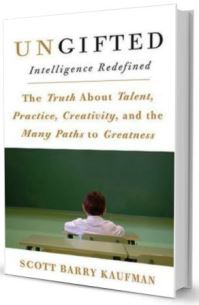
Just a couple weeks ago I had a discussion with several psychologists and neurologists who seemed to share the opinion that “brain fitness” is a meaningless concept and pursuit. On the one hand, they thought, intelligence is a fixed trait and no intervention has shown so far to reliably increase it. On the other hand,…
Read MoreAre we intelligent about developing human intelligence?
When it comes to our understanding of human intelligence, for too long, there has been a mismatch between theory and practice. Theoretically, the two main threads running through definitions of intelligence have been (a) adaptation to the environment, and (b) the cognitive, affective, and volitional characteristics that enable that adaptation. Practically, IQ tests measure an…
Read More