Sharp Brains: Brain Fitness and Cognitive Health News

Neuroplasticity, Brain Fitness and Cognitive Health News

Emerging consumer electronics to monitor and enhance brain functioning
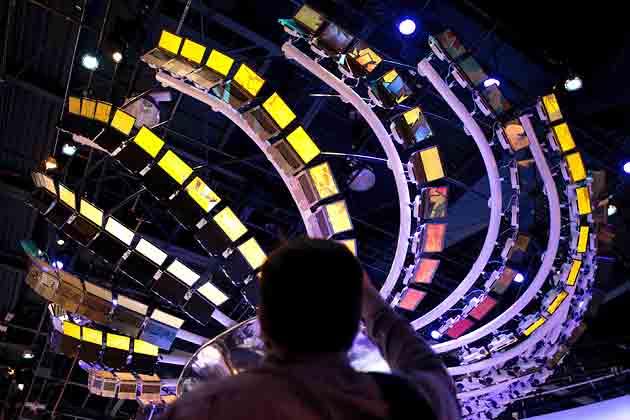
Ten Inno­v­a­tive Ideas in Con­sumer Elec­tron­ics (arti­cle by Bloomberg Busi­ness­week report­ing on CES 2013):

Human mon­i­tor­ing
The human body can be mon­i­tored, too, allow­ing us all to per­form bet­ter and live longer. Heart­Math makes heart mon­i­tors that are worn daily and report results online directly to doc­tors… Read the rest of this entry »

CES 2013: Combining brains and digital health in the workplace

The Brain: On the Front­line of Dig­i­tal Health in the Work­place (Huff­in­g­ton Post):

…It is esti­mated that some two bil­lion world­wide, one-third of the global pop­u­la­tion, suf­fer from brain-based health and pro­duc­tiv­ity chal­lenges with a related cost bur­den of more than $2 tril­lion. The broad scope of this mar­ket is empha­sized fur­ther when con­sid­er­a­tion is given to Read the rest of this entry »

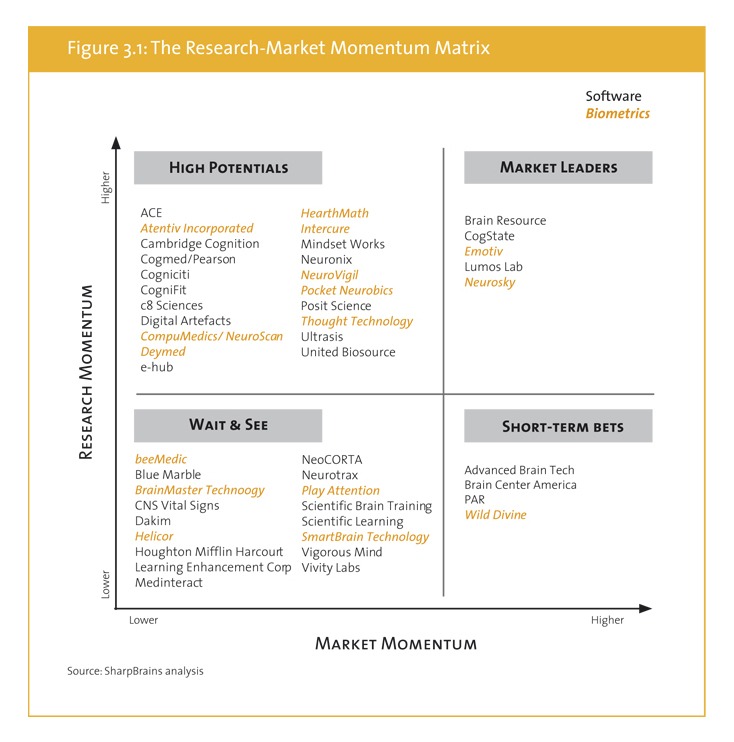
Congrats, Digital Brain Health pioneers: Brain Resource, CogState, Emotiv, Lumos Labs, Neurosky, and more

Source: SharpBrains.com’s Report on The Dig­i­tal Brain Health Mar­ket 2012–2020

5 Mar­ket Lead­ers   Read the rest of this entry »

When Employees Self-monitor and Self-enhance, what does HR do?

Employ­ees, Mea­sure Your­selves (Wall Street Journal):

- “For exam­ple, there’s Lumos­ity, from Lumos Labs Inc., an online sys­tem that serves up games employ­ees can play dur­ing down­time at work. … The dif­fer­ence is track­ing. The games offer a score­card of your per­for­mance and let Read the rest of this entry »

Transcript: Alvaro Fernandez on Brain Health and Non-invasive Cognitive Enhancement

Below you can find the full tran­script of our engag­ing Q&A ses­sion yes­ter­day on life­long cog­ni­tive fit­ness, “men­tal cap­i­tal­ism”, and more,  with Alvaro Fer­nan­dez, co-author of The Sharp­Brains Guide to Brain Fit­ness, mod­er­ated by Harry Moody, Direc­tor of Aca­d­e­mic Affairs at AARP.

Read the rest of this entry »

Debunking 10 Brain Training/ Cognitive Health Myths

Think about this: How can any­one take care of his or her brain when every week brings a new bar­rage of arti­cles and stud­ies which seem to con­tra­dict each other?

Do sup­ple­ments improve mem­ory? Do you need both phys­i­cal and men­tal exer­cise or is one of them enough? Which brain train­ing approach, if any, is worth one’s time and money?

We tried to address these ques­tions, and many oth­ers, in our recent book, The Sharp­Brains Guide to Brain Fit­nessSharpBrains Guide to Brain Fitness. The Book (182 pages, $24.95), that we pre­sented at Games for Health Con­fer­ence last week. The book is the result of over two years of exten­sive research includ­ing more than a hun­dred inter­views with sci­en­tists, pro­fes­sion­als and con­sumers, and a deep review of the sci­en­tific lit­er­a­ture, led by neu­ropsy­chol­o­gist Elkhonon Gold­berg and myself with the help of cog­ni­tive sci­en­tist Pas­cale Mich­e­lon. As we wrote in the Intro­duc­tion, what we wanted to do first of all was to debunks these 10 myths on brain health and brain training:

Myth 1. Genes deter­mine the fate of our brains.
Facts: Life­long neu­ro­plas­tic­ity allows our lifestyles and actions to play a mean­ing­ful role in how our brains phys­i­cally evolve, espe­cially given longer life expectancy.

Myth 2. Aging means auto­matic decline.
Facts: There is noth­ing inher­ently fixed in the pre­cise tra­jec­tory of how brain func­tions evolve as we age.

Myth 3. Med­ica­tion is the main hope for cog­ni­tive enhance­ment.
Facts: Non-invasive inter­ven­tions can have com­pa­ra­ble and more durable effects, side effect-free.

Myth 4. We will soon have a Magic Pill or Gen­eral Solu­tion to solve all our cog­ni­tive chal­lenges.
Facts: A multi-pronged approach is rec­om­mended, cen­tered around nutri­tion, stress man­age­ment, and both phys­i­cal and men­tal exercise.

Myth 5. There is only one “Use It or Lose it”.
Facts: The brain is com­posed of a num­ber of spe­cial­ized units. Our life and pro­duc­tiv­ity depend on a vari­ety of brain func­tions, not just one.

Myth 6. All brain activ­i­ties or exer­cises are equal.
Facts: Var­ied and tar­geted exer­cises are the nec­es­sary ingre­di­ents in brain train­ing so that a wide range of brain func­tions can be stimulated.

Myth 7. There is only one way to train your brain.
Facts: Brain func­tions can be impacted in a num­ber of ways: through med­i­ta­tion, cog­ni­tive ther­apy, cog­ni­tive training.

Myth 8. We all have some­thing called “Brain Age”.
Facts: Brain age is a fic­tion. No two indi­vid­u­als have the same brain or expres­sion of brain functions.

Myth 9. That “brain age”‚ can be reversed by 10, 20, 30 years.
Facts: Brain train­ing can improve spe­cific brain func­tions, but, with research avail­able today, can­not be said to roll back one “brain age”‚ by a num­ber of years.

Myth 10. All human brains need the same brain train­ing.
Facts: As in phys­i­cal fit­ness, users must ask them­selves: What func­tions do I need to improve on? In what time­frame? What is my budget?

Do you have other myths in mind you would like  us to address?

We have started to receive great feed­back from the health­care com­mu­nity, such as this email from a neu­ro­sur­geon in Texas:

I really like the book, it is com­pre­hen­sive with­out being too tech­ni­cal. I have rec­om­mended it to sev­eral patients. There are some other books that I expected would be greeted with enthu­si­asm, but were too com­plex for most of my patients. I think this book is right in the sweet spot”.

A short, sweet, enter­tain­ing read of a com­plex topic, with timely (writ­ten in 1/09) reviews of 21 top tech­nol­ogy prod­ucts, as well as informed and expert pre­dic­tions of where this bur­geon­ing brain-fitness field is headed. More impor­tantly, after you read it, you’ll have a good, detailed sense of where you, per­son­ally, can act to improve your own couch-potato brain — and how to keep it fit and flex­i­ble your whole life. The Sharp­Brains Guide To Brain Fit­ness reminds of us all why books (and not just googling a topic) can be well worth your time and money. Two Stetho­scopes Up — check it out. life.”

And this great book review by an Internist Physi­cian and Robert Wood John­son Foun­da­tion Fel­low, titled Is Your Brain A Couch Potato?:

Doc Gur­ley, book review for SFGate.com (06/08/09)

The bookThe Sharp­Brains Guide to Brain Fit­ness (avail­able via Amazon.com Here, review copies avail­able upon request).

Descrip­tion: While most of us have heard the phrase “use it or lose it,” very few under­stand what it means, or how to prop­erly ‚“use it”‚¬ in order to main­tain brain func­tion and fit­ness. The Sharp­Brains Guide to Brain Fit­ness is an invalu­able guide that helps read­ers nav­i­gate grow­ing brain research and iden­tify the lifestyle fac­tors and prod­ucts that con­tribute to brain health and fit­ness. By gath­er­ing insights from eigh­teen of the world’s top sci­en­tists and offer­ing tools and detailed descrip­tions of over twenty prod­ucts, this book is an essen­tial guide to the field of brain fit­ness, neu­ro­plas­tic­ity and cog­ni­tive health. An acces­si­ble and thought-provoking read, The Sharp­Brains Guide to Brain Fit­ness edu­cates life­long learn­ers and pro­fes­sion­als in health­care, edu­ca­tion, busi­ness, etc., on emerg­ing trends and fore­casts of what the future will hold.

Prod­ucts Reviewed (we reviewed sci­en­tific stud­ies pub­lished before Jan­u­ary 2009, when the man­u­script text was closed):

– Over­all brain main­te­nance: Brain Age series (Nin­tendo), Brain­Ware Safari (Learn­ing Enhance­ment Cor­po­ra­tion), FitBrains.com (Viv­ity Labs), Happy-Neuron.com (Sci­en­tific Brain Train­ing), Lumosity.com (Lumos Labs), Mind­Fit (Cog­niFit), (m)Power (Dakim)

– Tar­geted brain work­out: Clas­sic and InSight (Posit Sci­ence), Work­ing Mem­ory Train­ing JM and RM (Cogmed), Dri­ve­Fit (Cog­niFit), Earo­bics (Houghton Mif­flin), Fast For­Word (Sci­en­tific Learn­ing), Intel­li­Gym (Applied Cog­ni­tive Engi­neer­ing), Vision Rest­pra­tion Ther­apy (NovaVision)

– Emo­tional self-regulation: emWave PC and Per­sonal Stress Reliever (Heart­Math), Jour­ney to the Wild Divine (Wild Divine), RES­PeR­ATE (Inter­Cure), StressEraser (Helicor)

Cognitive Enhancement and Exercise, by Dr. Elkhonon Goldberg

Dr. Gin­ger Camp­bell just pub­lished a nice pod­cast inter­view with our co-founder and chief sci­en­tific advi­sor Dr. Elkhonon Gold­berg, whom we also inter­viewed some months ago on brain improve­ment research and ideas.

The first half of the 30-minute inter­view is a bit tech­ni­cal, includ­ing a nice intro­duc­tion to the field of neu­ropsy­chol­ogy as the con­ver­gence of neu­rol­ogy and psy­chol­ogy. It starts focus­ing on the role of life­long learn­ing and cog­ni­tive exer­cise at minute 15 or so. Some of the take-aways from the sec­ond half:

  • Given that the brain’s right hemi­sphere seems more focused on deal­ing with nov­elty than the left one (more focused on pat­tern recog­ni­tion based on pre-wired neural net­works due to pre­vi­ous expe­ri­ences), and that the right hemi­sphere typ­i­cally declines first as we age…we need to ensure a good sup­ply of novel chal­lenges to main­tain our brain, includ­ing the right hemi­sphere, sharp.
  • The field of Cog­ni­tive Fit­ness is now emerg­ing because Baby Boomers are more edu­cated, proac­tive and computer-savvy than pre­vi­ous gen­er­a­tions (as a broad gen­er­al­iza­tion), and Read the rest of this entry »

Top Articles on Brain Health and Neuroplasticity

  1. Debunk­ing 10 com­mon brain fit­ness myths, by Alvaro Fernandez
  2. Brain plas­tic­ity: How learn­ing changes your brain, by Pas­cale Michelon
  3. 8 Tips To Remem­ber What You Read, by Bill Klemm
  4. Why do You Turn Down the Radio When You’re Lost?, by Car­o­line Latham
  5. Retool­ing Brain Care With Low-Cost, Data-Driven Tech­nolo­gies, by Alvaro Fernandez
  6. Do you believe these neu­romyths?, by SharpBrains
  7. Six tips to build resilience and pre­vent brain-damaging stress, by SharpBrains
  8. Does cog­ni­tive train­ing work? (For Whom? For What?), by Pas­cale Michelon
  9. The Emo­tional Life of Your Brain, by by Richard David­son, Sharon Begley
  10. To Be (Your Con­nec­tome), or Not to Be (Your Genome), by Sebas­t­ian Seung
  11. Top 10 Brain Fit­ness Future Trends, by Alvaro Fernandez
  12. Biofeed­back now a “Level 1 — Best Sup­port” Inter­ven­tion for ADHD, by SharpBrains
  13. When 1 + 1 = 5: Dyscal­cu­lia and Work­ing Mem­ory, by Tracy Alloway
  14. Train­ing Atten­tion and Emo­tional Self-Regulation — Inter­view with Michael Pos­ner, by Alvaro Fernandez
  15. The Ten Habits of Highly Effec­tive Brains, by Alvaro Fernandez
  16. Does brain train­ing work? Yes, if it meets these 5 con­di­tions, by SharpBrains
  17. Cog­ni­tive ther­apy or med­ica­tion? Brain scans may help per­son­al­ize treat­ments, by SharpBrains
  18. New Study shows Teens with ADHD helped by Cog­ni­tive Behav­ioral Ther­apy, by David Rabiner
  19. How Do Words Change Our Brains and Lives?, by Andrew New­berg, Mark Waldman
  20. BBC “Brain Train­ing” Exper­i­ment: the Good, the Bad, the Ugly, by Alvaro Fernandez
  21. From Anti-Alzheimer’s “Magic Bul­lets” to True Brain Health, by Alvaro Fer­nan­dez, Peter Whitehouse
  22. Why Agile Minds Deploy Both Ratio­nal and Intu­itive Problem-Solving, by Judith Tingley
  23. Why I Wrote The Woman Who Changed Her Brain, by Bar­bara Arrowsmith-Young
  24. The Busi­ness and Ethics of the Brain Fit­ness Boom, by Alvaro Fernandez
  25. Break­ing Down the Cog­ni­tion & Alzheimer’s Dis­ease Alpha­bet Soup, by Dharma Singh Khalsa
  26. Top 10 Quotes on Life­long Neu­ro­plas­tic­ity, by Alvaro Fernandez
  27. To Har­ness Neu­ro­plas­tic­ity, Start with Enthu­si­asm, by Helena Popovic
  28. Q&A with Yaakov Stern on Brain Reserve, Exer­cise, Cog­ni­tive Train­ing, Angry Birds, by Alvaro Fernandez
  29. Eval­u­a­tion Check­list for Brain Fit­ness prod­ucts and games, by Alvaro Fernandez
  30. Mind­ful­ness and Med­i­ta­tion in Schools for Stress Man­age­ment, by Jill Sutie
  31. Stress and Neural Wreck­age: Part of the Brain Plas­tic­ity Puz­zle, by Gre­gory Kellet
  32. Cog­ni­tive and Emo­tional Devel­op­ment Through Play, by David Elkind
  33. AARP’s Brain Fit­ness Best Books List, by SharpBrains
  34. Judith Beck: Train Your Brain to Think Like a Thin Per­son, by Alvaro Fernandez
  35. Improve Mem­ory with Sleep, Prac­tice, and Test­ing, by Bill Klemm
  36. 10 Brain Tips To Teach and Learn, by Lau­rie Bartels
  37. Dr. Elkhonon Gold­berg on Cog­ni­tive Train­ing and Brain Fit­ness, by Alvaro Fernandez
  38. Mind­ful­ness Med­i­ta­tion for Adults & Teens with ADHD, by David Rabiner
  39. Phys­i­cal Exer­cise and Brain Health, by Pas­cale Michelon
  40. Sleep, Tetris, Mem­ory and the Brain, by Shan­non Moffet

Welcome to SharpBrains.com

As seen in The New York Times, The Wall Street Jour­nal, CNN and more, Sharp­Brains is an inde­pen­dent mar­ket research and think tank track­ing health and well-being appli­ca­tions of brain science.

Watch 2013 SharpBrains Summit Tutorial (3 minutes)

Summit_videocover

Register Now at Discounted Rates

2013 SharpBrains Summit
Enter Your Email and Sub­scribe to our free Monthly eNewslet­ter:
Join more than 40,000 Sub­scribers and stay informed and engaged.

Follow Us Via…

twitter_logo_header