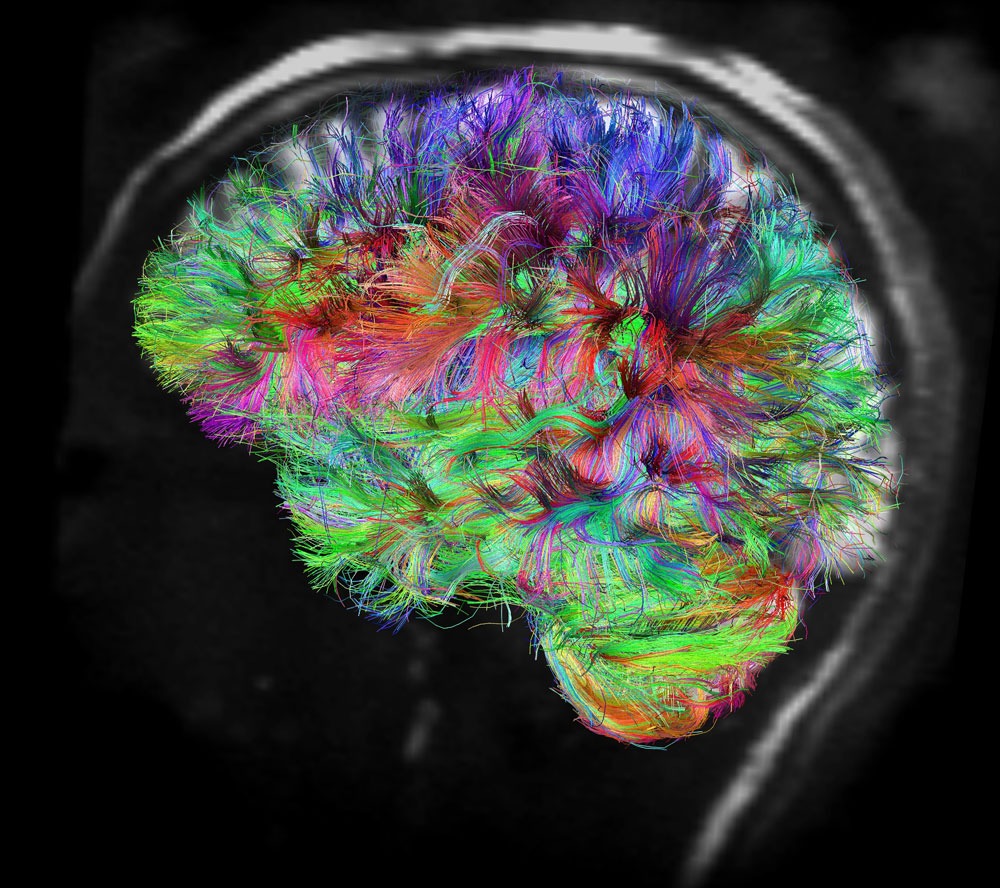
By: Sebastian Seung @ MIT
NO ROAD, NO trail can penetrate this forest. The long and delicate branches of its trees lie everywhere, choking space with their exuberant growth. No sunbeam can fly a path tortuous enough to navigate the narrow spaces between these entangled branches. All the trees of this dark forest grew from 100 billion seeds planted together. And, all in one day, every tree is destined to die.
This forest is majestic, but also comic and even tragic. It is all of these things. Indeed, sometimes I think it is everything. Every novel and every symphony, every cruel murder and every act of mercy, every love affair and every quarrel, every joke and every sorrow — all these things come from the forest. Read the rest of this entry »
By: Dr. Jerome Schultz
(Editor’s note: below you have part 5 of the 6-part The Neurobiology of Stress series. If you are joining the series now, you can read the previous part Here.)
Stayin’ Alive
Understanding the Human Brain and How It Responds to Stress
The Human Brain Likes to Be in Balance
Fortunately, the brain has some built — in safety systems. Too much cortisol in the blood signals the brain and adrenal glands to decrease cortisol production. And under normal conditions, when the stress is overcome or brought under control (by fighting, fleeing, or turning into an immobile statue, or by mastering the threat), the hypothalamus starts sending out the orders to stand down. Stop producing cortisol! Event over! Under continuous stress, however, this feedback system breaks down. The hypothalamus keeps reading the stress as a threat, furtively sending messages to the pituitary gland, which screams out to the adrenal glands to keep pumping out cortisol, which at this point begins to be neurotoxic — poison to the brain. Read the rest of this entry »
By: Dr. Robert Sylwester
Eric Jensen alerted me to a research study published in the February 4th Journal of Neuroscience — Transgenerational Rescue of a Genetic Defect in Long-Term Potentiation and Memory Formation by Juvenile Enrichment. We both had the same initial WOW! feeling that we had experienced when we first read about the discovery of mirror neurons a decade+ ago.
The study’s findings seemed to suggest that acquired characteristics can be genetically transmitted, a Lamarckinan belief that had long been discarded by biologists. This seemed improbable, so we decided to check out what the scientific community thought. It’s the kind of research that educators certainly need to understand because the potential educational implications are profound, no matter how this particular study sorts out.
I’ve thus appended the following information below: (1) the abstract and reference of the original sttudy, (2) a link to a non-technical report in the current issue of New Scientist, (3) a link to a non– technical explanation of the research in Medical News Today, and (4) a link to a recent extended non-technical New Scientist article on the issue of non-genetic inheritance. Eric will post his commentary on the research in the March edition of his Brighter Brain Bulletin newsletter.
THE STUDY:
To put it simply: The researchers studied long-term potentiation (LTP), in which longer and more robust synaptic activation occurs. LTP is the basic mechanism for learning and memory formation.
Juvenile mice placed into an enriched environment (EE) developed enhanced LTP capabilities that they later transmitted to their own offspring during embryogenesis (rather than through later maternal instruction), and these effects persisted even when the offspring weren’t in an EE. The study concluded that a stimulating juvenile environment can thus influence the composition of signaling networks that influence synaptic plasticity and memory formation in the enriched mouse, and also in its future offspring.
The problem with this research appears to be over whether the transmitted effects occurred via genetic changes or through something else in the mother’s uterine environment. A female’s eggs develop early in life to be distributed later, so it’s improbable that a female’s juvenile experiences would alter the DNA in her eggs. A more probable explanation may be that any changes in the mother’s brain that occur via an EE are represented as currently ill– understood signaling molecules that pass through the placental barrier into the embryonic brain.
THE SIGNIFICANCE:
For educators, this research simply adds to our own strong belief that long-term benefits accrue from a stimulating early environment that encourages curiosity and exploration. The research builds on Read the rest of this entry »
By: Alvaro Fernandez
July is shaping up to be a fascinating month, full of cognitive health research reports and applications. Here you have a roundup, covering food for the brain, cognitive assessments, mental training and DNA, and more.
1) Brain foods: the effects of nutrients on brain function (Nature Neuroscience)
By: Alvaro Fernandez
An anonymous reader of Andrew Sullivan’s blog writes a superb comment, reproduced here:
“One thing Watson and others forget is that the brain is highly malleable based on environment. Although he is the father of DNA he knows very little about neuroplasticity and neurogenesis. Previously it was thought that the human brain was ‘hardwired’ after a certain age. This is not true. Not only is not true, but the human mind is capable of adaptation but actual neuron growth even late in life. Ten years ago this was thought impossible.
Neurogenesis and neuroplasticity proves that a nurturing social and family setting shifts IQ, perspective, and emotional IQ. The so-called bell curve isn’t genetic. Oppressed Tibetans and Chinese ethnic minorities –whose test scores soar in the United States and Canada– are 20–30 points lower in their homeland. That 20–30 points deficit is in the same range of a lot of groups that are attacked or threatened (Muslims in France, Christians in Nigeria, Blacks in America). Conversely when oppressed groups are removed from their environment their IQ, emotional health returns to a normal rate, thus proving that is NOT genetic.
It is plastic, shifting and based upon the environment.
That is why people Read the rest of this entry »
By: Caroline Latham
We hope you are enjoying the growing coverage of Brain Fitness as much as we are. Below you have the Brain Fitness Newsletter we sent a few days ago-you can subscribe to this monthly email update in the box on the right hand side.
In this post, we will briefly cover:
I. Press: see what CBS and Time Magazine are talking about. SharpBrains was introduced in the Birmingham News, Chicago Tribune and in a quick note carried by the American Psychological Association news service.
II. Events: we are outreach partners for the Learning & the Brain conference, which will gather neuroscientists and educators, and for the Dana Foundation’s Brain Awareness Week.
III. Program Reviews: The Wall Street Journal reviewed six different programs for brain exercise and aging, and the one we offer is one of the two winners. A college-level counseling center starts offering our stress management one. And we interview a Notre Dame scientist who has conducted a replication study for the working memory training program for kids with ADD/ ADHD.
IV. New Offerings: we have started to offer two information packages that can be very useful for people who want to better understand this field before they commit to any particular program: learn more about our Brain Fitness 101 guide and Exercise Your Brain DVD.
V. Website and Blog Summary: we revamped our home page and have had a very busy month writing many good articles. We also hosted two “Blog Carnivals”- don’t you want to know what that means?
Read the rest of this entry »
By: Alvaro Fernandez
Good interview with Posit Science’s Dr. Michael Merzenich. (Thanks, Steve!)
Includes the quote “People can be active learners by learning in new forms and in new domains. It’s not just being active and getting up every day. The brain is a learning machine, and it needs to be engaged in new learning of different dimensions. The best kinds of exercise are those that challenge. For example, to master a musical instrument at an older age is a wonderful thing. Or, seriously undertaking the mastery of a second language is a wonderful thing to do. One of the problems with such exercises is that it’s very hard to maintain the skills and abilities necessary to maintain a mental fitness program.”
You can read our previous Brain Coach Answers post on why crosswords and sudoku aren’t sufficient brain exercise.