Why I Wrote The Woman Who Changed Her Brain
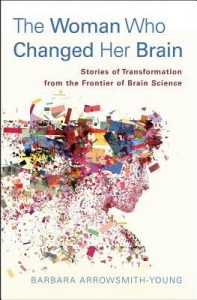 We have always thought that “our brain shapes us.” I wrote my new book, The Woman Who Changed Her Brain (May 2012; Free Press, Foreword by Norman Doidge), to prove that the reverse is equally true. I wanted to demonstrate how “we can shape our brains.”
Imagine having a brain that is capable and incapable at the same time. Growing up, I had severe learning disabilities. I lived in a world that was confusing and incomprehensible. As I was to later discover, a critical part of my brain was not working properly, the end result being that all language was experienced as foreign and my translator was broken. Finding connections between things and ideas was a challenge, and telling time, for instance, was impossible—I couldn’t grasp the relationship between the big hand and the little hand on a clock. I could not understand cause and effect, so felt buffeted by random events, not being able to see the ‘why’ of things. And this was the 1950’s and 60’s when the brain was viewed as unchangeable, so I was told I had best learn to live with my limitations. I walked around in a fog, relying on my excellent memory and my drive and determination to find an answer to what plagued me.
As a young graduate student in psychology, frustrated with the enormous expenditure of energy required to work around my problems and with very limited success, I came across the research of the great Russian neuropsychologist Alexander Luria, who studied soldiers who had suffered head wounds. Using Luria’s detailed descriptions of the functions of various brain regions, I identified 19 unique learning dysfunctions. And after reading the research of Mark Rosenzweig who demonstrated that stimulation could improve the brains of rats, I theorized that a person could transform weak areas of the brain through repetitive and targeted cognitive exercises. With much reading and an intuitive understanding of the brain’s functioning, I invented a series of cognitive exercises to “fix” my own brain. This was in 1978, long before the concept of “neuroplasticity” was widely understood. At the time, the scientific community believed this kind of transformation was impossible, but the exercises did indeed, in my first-hand experience, radically improve the function of the weakened areas of my brain. Today, this notion of brain plasticity—which I began exploring three decades ago—is becoming established wisdom in neuroscience.
In the past five years, the idea that self-improvement can happen in the brain has caught hold and inspired new hope. Assessment measures and brain exercises are being developed to identify and then strengthen weak cognitive capacities that underlie specific learning disabilities. From these developments and with my vision for this program to be widely available to all struggling students, the Arrowsmith Program and School was born and, today, 35 schools both independent and publicly funded throughout Canada and the U.S. have implemented the program.
I wrote The Woman Who Changed Her Brain to combine my own personal journey with case histories from three decades as a researcher and educator, unraveling the mystery of how our brain mediates our functioning in the world. I am enthused by the brain’s incredible ability to change and overcome learning problems and our growing understanding of the workings of the brain and its profound impact on how we participate in the world.
My work has been and continues to be a labour of love and I am honored to share now my journey and life’s work. I sincerely hope many SharpBrains readers will enjoy my new book and contribute to changing the way our society still thinks about the brain and mind.
–>To Learn More and Order Book: The Woman Who Changed Her Brain (May 2012; Free Press, Foreword by Norman Doidge)
–> To Watch 3‑minute clip: click Here
 – Barbara Arrowsmith-Young is the Director of Arrowsmith School and Arrowsmith Program where she continues to develop programs for students with learning disabilities. It is her vision that this program be available to all students struggling with learning disabilities so they may know the ease and joy of learning and to realize their dreams.
Share this:

About SharpBrains
Top Articles on Brain Health and Neuroplasticity
Top 10 Brain Teasers and Illusions
Got the book?