

Transcript: Paul Nussbaum on Meditation, Neuropsychology and Thanksgiving

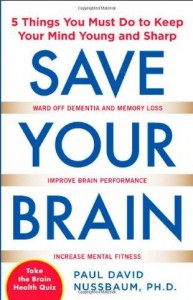 Below you can find the full transcript of our engaging Q&A session yesterday on holistic brain health with clinical neuropsychologist Dr. Paul Nussbaum, author of Save Your Brain. You can learn more about the full Brain Fitness Q&A Series Here.
Perhaps one of the best exchanges was:
2:08
AlvaroF: Stress management sounds different from spirituality. Meditation too. Can you please describe what specific practices/ outcomes fall under spirituality?
2:10
Dr. Nussbaum: Sure. I refer to spirituality in a broad sense to try and capture the impact of a brain that is at peace or without negative impact of stress, particularly chronic stress. On the behavioral front, I note humans have particular ways to generate reduction in stress. This is important as we know from animal research that too much stimulation can cause the brain to stop developing. As such, behaviors such as meditation, prayer, interaction with nature, breathing, yoga, etc all help the organism and brain to slow and to integrate inside and outside.
Full Transcript of Live Q&A held on November 22nd, 2–3pm ET
2:00
AlvaroF: Hello everyone
2:01
AlvaroF: We are starting the third Brain Fitness Q&A session with authors of books named Best Books on Brain Fitness by AARP.
2:01
AlvaroF: And today we have the pleasure to have Dr. Paul Nussbaum, author of Save Your Brain, with us.
2:02
AlvaroF: You can all start writing your questions.
2:02
Comment From Nasrin Lakhani
Hello Alvaro and Dr. Nussbaum
2:02
Comment From Mark Waldman
Good morning Alvaro and Paul
2:02
Dr. Nussbaum: Hello everyone and thank you Alvaro
2:03
AlvaroF: Thank you very much for being with us. Let me first explain that this is a web chat — there is no audio or video.
2:03
AlvaroF: Let’s go ahead!
2:03
Comment From Mark Waldman
What do you feel are the 5 best ways to maintain a healthy brain?
2:04
Dr. Nussbaum: Hello Mark. My major focus has been on lifestyle with brain health. My belief and work centers on five major areas to include physical activity, mental stimulation, nutrition, socialization, and spirituality. Research has been conducted on specific behaviors within each of these five major domains to indicate a relationship between the activity and reduction in risk of dementia or what I call brain health.
2:05
AlvaroF: Which one of those 5 elements do you believe is underappreciated by the public at large, and the media?
2:06
Dr. Nussbaum: My opinion is the area of spirituality although it is gaining momentum as we learn more from the research on neurotheology. The impact of meditation, prayer, relaxation, breathing, etc on stress reduction and enhanced brain function is quite interesting. This will only increase with more advanced and sensitive measures of the brain.
2:08
AlvaroF: Stress management sounds different from spirituality. Meditation too. Can you please describe what specific practices/ outcomes fall under spirituality?
2:10
Comment From Pascale
So it is not clear which specific aspects of spirituality have an impact on brain health? Any specific study showing that prayer itself has any effect?
2:10
Dr. Nussbaum: Sure. I refer to spirituality in a broad sense to try and capture the impact of a brain that is at peace or without negative impact of stress, particularly chronic stress. On the behavioral front, I note humans have particular ways to generate reduction in stress. This is important as we know from animal research that too much stimulation can cause the brain to stop developing. As such, behaviors such as meditation, prayer, interaction with nature, breathing, yoga, etc all help the organism and brain to slow and to integrate inside and outside.
2:11
Comment From Mark Waldman
In the brainscan/meditation research I do with Andy Newberg, we came to the conclusion that optimism was the #1 best way to exercise the brain, based on 2 longitudinal studies from Mayo and Duke U. Adds 2 years to life. We listed meditation as #4.
2:12
Dr. Nussbaum: Prayer has been studied by some folks at Duke and there has been some relationship between prayer on a daily basis and enhanced immune function, prayer and sense of happiness, and prayer and stress reduction. I have not seen a specific study on prayer and cognitive function. On the other side, I continue to be amazed with my patients with late stage AD and their maintained ability and respect for religious practice including prayer.
2:13
AlvaroF: So perhaps spirituality is a potential avenue towards stress management and optimism. Would other techniques from cognitive therapy to biofeedback be complementary? How do people navigate different options?
2:13
Dr. Nussbaum: Thanks Mark and interesting. I believe the whole area of positive thinking with stimulation of the left frontal lobe is exciting and may soon be applied for many people in the near future.
2:15
Dr. Nussbaum: I do view prayer as an option similar to others Alvaro. We may find that this whole area has some general ability with humans, and that there may be a customized approach by person. The important message is that environmental input is critical to the brain and will have some impact on the brain. My hope is to identify and then apply those that are found to be brain healthy.
2:15
Comment From Dr Diamond
In our Indian culture — we are taught at early age ‑4 ‑5yrs — to meditate ‑10 mins to 15 mins — early morning and before going to sleep — and the only ‘media’ was saying our religious names, poems etc. so for us meditation was very much connected to spirituality — this also gave us ‘relaxation’ time so as to speak
2:16
Comment From Nasrin Lakhani
Is there any concrete research on relaxation enhancing brain function? I practice Biofeedback — it would be interesting. Mark is your study available?
2:16
Dr. Nussbaum: Very good Dr. Diamond. I speak to teachers across the USA and I believe meditation and relaxation procedures can enhance learning and should be considered within the education system.
2:18
Dr. Nussbaum: Nasrin. I would encourage you to review the work of Dr. Sapolsky at Stanford. Stress increases the activity of the Amygdala which suppresses the hippocampus. As the hippocampus is necessary for learning we can begin to understand the import of a relaxed brain on maximal learning potential. Biofeedback is a method to gain some control over the body and brain.
2:19
Comment From Pascale
Can you say more about the study of positive thinking with stimulation of the left frontal lobe? Sounds intriguing!
2:20
AlvaroF: Nasrin, I also encourage you to look for “heart rate variability” and cognition in PubMed, there’s quite a bit.
2:21
Dr. Nussbaum: Sure. There is some interesting work from Dr. Hanson who wrote Buddha’s Brain on the left frontal lobe and eeg correlates with positive thinking. We also know that the left frontal lobe that incurs stroke or other damage can result in depression, often called post-stroke depression. These areas we are discussing are relatively new and offer tremendous promise not just from a clinical perspective, but from a health promotion perspective.
2:22
AlvaroF: That is a critical point — would you say we have a more significant opportunity today either in terms of clinical applications or public health promotion (or both)?
2:23
Dr. Nussbaum: As the medical field is so prominent in the USA and continues to be disease driven we will likely view the world from such a perspective. My hope is that this changes to a health promotion perspective with well studied proactive approaches to health across the lifespan. This includes the brain. I think this is starting to take some hold.
2:24
Comment From Guest
Yes we are thinking of adding to our activities in The Inter generational School here in Cleveland.
2:24
Comment From Mark Waldman
There is new evidence that intense, long term meditation thickens the neocortex and shrinks the amygdala. Less stress, increased cognition. Lot’s of studies showing small but significant cognitive improvement for students taking tests.
2:24
Comment From Mark Waldman
Herb Benson at Harvard has shown that the relaxation response (20 minutes of focusing on a positive meaningful word) turns on genes involved in the reduction of stress.
2:25
Dr. Nussbaum: Great. I think as we learn and accept more the idea and power of neural plasticity and that environment matters, we will continue to focus more on how the brain interfaces and responds to particular stimuli and how health is promoted.
2:26
AlvaroF: Couldn’t agree more that we need a lifespan approach to health, including brain health. Where do you see that starting to happen in the US?
2:26
Dr. Nussbaum: Mark. I believe we are learning more about the triggers of the genes. We have identified every gene in the human body. We now need to understand what triggers or silences the manifestation of genes. It is my view that there is an entire world of stimuli such as thought that might be important here.
2:28
AlvaroF: Given all we’re discussing here, what do you make of last year’s NIH statement on the prevention of Alzheimer’s/ cognitive decline, which was basically reported as “nothing works”.
2:29
Dr. Nussbaum: Alvaro. My own experience over the past 15 years when there were not many of us interested in brain health is that it is actually happening in the community rather than the academics or medical field. By this I mean the consumer has become more educated and more interested in health. I do believe business, schools, libraries, media, and the religious sector have been very interested for some time. I do see that traditional medicine and academia are now becoming more interested. In this sense, it has been consumer driven.
2:29
Comment From Pascale
Do you think there is still a lot of education to be done before brain fitness become an obvious thing to care about, as much as physical fitness?
2:30
Comment From Nasrin Lakhani
There is so little public awareness about brain fitness, biofeedback — any ideas on navigating the issue?
2:32
Dr. Nussbaum: I get that question a lot Alvaro. My read of the NIH statement is that the medical field is taking a serious look at this growing field of study and practice. My take home message from NIH is that we need to conduct more prospective research that helps us draw more cause and effect conclusions rather than the robust correlational work that has been done. I agree. However, it is important to understand that our medical work is based in large part on studies that are correlational and indeed our practice is often based on advice that is correlational in nature. Finally, the NIH takes a medical approach and views brain health as an illness that needs to be cured. Brain health is not AD, but rather a practice towards health. Health promotion is not the same as disease treatment or even disease prevention.
2:34
Dr. Nussbaum: Nasrin. Fortunately there is much more information on Brain Health which I differentiate from brain fitness. You might want to take a look at the recent issue of Generations dedicated to brain health, published by the American Society on Aging (www.asaging.org).
2:34
AlvaroF: Yes — the NIH panel didn’t review many of the maintenance/ enhancement outcomes most of us care about.
You were involved with the ASA brain health poll a few years ago, which identified a very positive response to the idea of an annual “mental checkup”, Any progress?
2:35
Comment From Peter Whitehouse
I think some times more research is not the answer frankly.
2:35
Dr. Nussbaum: We have not followed with an empirical approach on that specific issue. However, I am aware of people and companies not adopting brain health practice as part of their overall wellness program. I do believe the ASA work I helped with years ago helped to continue the awareness and education of the issue that is needed.
2:36
Comment From Mark Waldman
Andy Newberg would say that nothing works yet, and we’re just beginning the journey. He has hope and faith that we will find ways to improve our neural functioning.
2:36
Dr. Nussbaum: Hello Peter. I would tend to agree, but I think research can help provided we are clear what we are looking for.
2:36
Comment From Guest
Unless your business is research. :)
2:36
Comment From Jeanette
I have read that the number 1 disease Baby Boomers fear is Alzheimer’s. Do you think that brain fitness awareness is being driven by Boomers more than any other older or younger generation?
2:38
Dr. Nussbaum: Mark. Andy does great work. My thought would be what is meant that “nothing works.” Brain Health practice does not mean prevention of disease. I believe you cited your own work on optimism and its utility. These are the things that can help us understand the effects of particular behavior on the brain. My hope is learn more about what promotes health.
2:39
Dr. Nussbaum: Hello Jeanette: I think that is fair and may have some truth. Boomers like me tend to be a bit more focused on health than our parents and grandparents. The energy from the boomers helps to create momentum and demand. Boomers are very interested in the brain and brain health because they are caregivers for parents who may have dementia and boomers will learn what is known about delaying onset of such diseases.
2:40
Comment From Guest
Do you think it will take insurance reimbursement/co-pay before our society includes brain health as a part of any substantive wellness program (either personal or corporate)?
2:41
Dr. Nussbaum: I think a system can change if the consumer demands it. Insurance companies do not want to be left out of a service or product, etc. that consumers want and demand. I think as we learn more about the brain and as our research provides more support for brain health we will see movement at the policy, govt, private insurance, etc. level.
2:41
Comment From EB
If better brain health can prevent or delay the risk for long-term impairment, then what is the nuance that makes it “not prevention of disease.”
2:44
Dr. Nussbaum: My personal approach is that prevention is not a good description because we really do not have convincing evidence for prevention of a disease. This is true of most diseases inside and outside the brain. However, my study of the area indicates we have tremendous amounts of research in the area of brain reserve that indicates an ability to not prevent, but delay onset. It is fair to point out that some brains diagnosed at autopsy with AD never manifested the disease in life and therefore one can argue for prevention. I personally am more comfortable with delaying onset and not using prevention.
2:46
AlvaroF: In the Generations special issue you write that “neuropsychology can become a larger player in the area of brain health”. How will this happen? PS: we see a lot of interest among neuropsychologists, speech and occupational therapists…
2:46
Comment From Nasrin Lakhani
Very helpful distinction — thank you
2:47
Comment From EB
Dr. Nussbaum, thank you for the thoughtful description difference of prevention and delay.
2:49
Dr. Nussbaum: Yes. As a neuropsychologist I believe it is fair to point out my field has taken the medical approach to clinical practice. I am very proud of my profession, but we are in a good position to really lead on brain health because we study neuroanatomy and we also have a keen interest in behavior. We should appreciate the relationship between environment and brain structure and function. The field has not moved towards brain health at the leadership position yet, though I am trying to make some inroads. I think there is great promise here.
2:50
AlvaroF: I agree. Elkhonon Goldberg (co-author of The SharpBrains Guide to Brain Fitness) is a neuropsychologist and we view many opportunities through neuropsych lens. Challenge is how to scale things.
2:50
Comment From EB
We need to organize some form of the Occupy movement (cleaner, clearer in message) for brain health so that we can spur the changes in policy, insurance, etc. Is there anything grass roots going on in any form for this?
2:51
AlvaroF: We only have a few minutes left so I am looking for questions on topics we haven’t discussed so far.
2:52
Dr. Nussbaum: Yes. I think there are some large issues with ecological validity and measurement. HOwever, there is also a huge growth area for health practices, education on brain basics, integration of brain health into society, and providing a dynamic and research-based proactive approach for all of us to live brain healthy lives.
2:52
Comment From Pascale
Do you think computerized cognitive training programs are a good answer to maintaining brain health? How do they compare to meditation, etc.?
2:54
Dr. Nussbaum: Pascale:
I do not know the answer to the second question as I am not familiar with any study on the specific question. Recall, I have five major components to my brain health lifestyle. I view computerized training programs as one activity within one slice (maybe two) of the approach, mental stimulation and socialization. I believe such training programs may be helpful with health promotion and I do not view them from a clinical intervention per se.
2:54
Comment From Dr Diamond
It is important that we first accept that we now live in an ‘unbalanced world’ — very stressful and demanding times — this means boomers are most affected — and really they have to take steps any step to reduce stress or learn to manage stress — to manage some equilibrium — or else they’re heading to some unpredictable mental health problems. So any step towards stress management, meditation — spirituality should help. I appreciate Dr Nussbaum’s efforts in promoting meditation(relaxation) and spirituality.
2:55
Comment From Guest
Where do you see the role of creativity in maintaining brain health?
2:55
Dr. Nussbaum: I agree Dr. Diamond. I also like your statement for it indicates we have power and control within us to modify and even change to a healthier existence.
2:56
Comment From Joanne
I firmly believe that laughter is really good for the brain. Do you know of any research that proves this?
2:56
Dr. Nussbaum: Creativity is powerful as it stimulates in large part the frontal lobe and can be well within the mental stimulation part of my lifestyle. Improv is a great example of a brain health mental stimulating/creative behavior.
2:57
Comment From Joanne
I also want to comment on Pascale’s question about computerized training programs which we use in our practice. We have also developed a brain fitness training program which uses some of the same types of exercises- but is done in groups — this seems to work at least as well as the computerized programs- and people really benefit from socializing
2:58
Dr. Nussbaum: There is research on humor though I cannot cite the specifics at this time. We used humor for our patients with cancer in the past. Humor is unique to humans and is another example of producing happiness and stress reduction.
2:58
AlvaroF: Paul and everyone, thank you very much for a wonderful conversation!
2:58
Dr. Nussbaum: Socialization is very important and is one of the five areas of my lifestyle approach.
2:59
Dr. Nussbaum: Thanks Alvaro and thanks to everyone.
2:59
AlvaroF: Any specific tip on how to live Thanksgiving in the most brain-enhancing way :-)
2:59
Dr. Nussbaum: Use the time to give and to forgive. Families are a wonderful social group, but we probably all have a chance to forgive and to apologize. Good for the brain.
Happy TG everyone.
3:00
AlvaroF: We need to wrap up now. Thank you again to everyone for your interest and participation. The full transcript will be available via sharpbrains.com by end of tomorrow. Bye and Happy TG!
3:01
Comment From Dr Diamond
Thank You Alvaro and Dr. Nussbaum
Transcripts of previous Q&A Sessions:
- Dr. Gary Small on Enhancing Memory and the Brain
- Alvaro Fernandez on “Mental Capitalism” and Cognitive Fitness
Share this:

3 Comments
About SharpBrains
Top Articles on Brain Health and Neuroplasticity
Top 10 Brain Teasers and Illusions
Got the book?
This is a great conversation with Dr. Nussbaum and attendees. I love the distinction between “Brain Fitness” and “Brain Health.” Also, the use of the expression: “delay” opposed to “prevention” of cognitive decline is a subtle, but powerful differences. When we express the practice in these terms, it will only improve the credibility of the concept that individually we can do something to help our self.
The concept of meditation and focus on stress reduction is of great importance. I believe that people are not always aware that they’re under some level of continual stress. The idea of making it a priority to give the brain a break to retreat for meditation, prayer, and gratitude(optimism)in relation to doing something important towards brain health is brilliant.
Thanks for a great exchange!
Mary Lou — very glad you enjoyed the exchange and gathered those excellent take-aways!
We obviously agree with Paul’s comments and take them further: the opportunity at hand is to enhance brain functionality at every stage of the lifespan, so that not only we improve quality of life and work at every stage but ALSO contribute to the delay of cognitive decline/ symptoms over time. This has many implications for education, sports, human resources, healthy living…well beyond medicine defined as treatment of disease (as Paul correctly highlights). Brain functionality is a continuum, and medicine tends to mostly/ only see the low end of it.
The information was very informative and helpful