

Top 10 Resources to Better Understand the Teenage Brain— Brain Health Series Part 2
 Adolescence can be a challenging time for both the adolescents and the significant adults (parents, teachers) in their lives. Teenagers themselves do not always understand why they behave the way they do. Why is it difficult being a teenager or interacting with one? Why do teenagers have these typical behaviors: Risk-taking, strange sleeping habits, addiction, impulsivity, etc.?
As looking at what is happening in a teenage brain can provide answers to these questions, we selected the Top 10 Resources to help you better understand the teenage brain. The major thread to navigate these resources is the concept of a brain still maturing. Indeed, an adolescent brain is 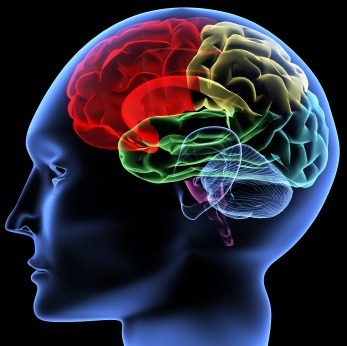 not yet an adult brain. Major changes are still happening, principally in the frontal lobes (more specifically in the prefrontal cortex). The frontal lobes (in red here) support the so-called executive functions: decision-making, problem-solving, planning, inhibiting, as well as other high-level functions (social behavior, emotional control, working memory, etc.).
1. Brain Storm: A fun and interactive feature from the New Scientist to discover which parts of the brain are maturing during adolescence and how this maturation can explain some unique adolescent behaviors, such as risk taking and morning lies-in.
2. The Adolescent Brain: A work in progress: This document, written in the context of the National Campaign to Prevent Teen Pregnancy, summarizes the many changes that occurs in the teenage brain. A detailed and interesting read by Daniel Weinberger, M.D., Brita Elvevåg, Ph.D and Jay Giedd, M.D.
3. Teenage Brain Fact Sheet, by the NIHM (National Institute of Mental Health): Summarizes the most significant recent neuroimaging studies showing changes in the teenage brain. These changes may reflect a process called synaptic pruning, which has been shown to occur earlier in life too: Neural connections (synapses) that get exercised/used are retained, while those that do not are lost.
4. Inside the Teenage Brain: With this very complete PBS documentary you will learn about research findings on the teen brains, the effect of sleep on teenagers’ memory, and many more interesting facts. Advice and online activities for parents are also available.
5. Interviews with Scientists: A great complement to the PBS program are the interviews with the scientists appearing in the program. We recommend in particular the interview with Dr. Jay Giedd, a neuroscientist at the NIMH, who talks about what  teens do during their adolescent years and how it can affect how their brains develop.
6. Brief on mental disorders: This short text from the Society for Neuroscience explores potential brain-based reasons why disorders such as schizophrenia and bi-polar disorder usually emerge during adolescence.
7. Depression in Adolescents: The NIMH provides here information on antidepressant medications for adolescent: Do they work? What does research tell us? What’s the relationship between SSRI and suicide rates in teenagers?
 8. Teenagers and addiction: This NPR story shows how their brain chemistry explains how easily teenagers can become addicted to alcohol, nicotine and illegal substances.
9. Dr. Sylwester’s book, The Adolescent Brain, combines personal stories with knowledge from psychology, education and neuroscience. Dr. Sylwester recently explained to us how teenagers are learning “how to be productive reproductive human beings” by planning the future, exploring emotions and sexuality and becoming independent.
10. Dr Feinstein’ s book, the Secrets of the Teenage Brain: Research-Based Strategies for Reaching & Teaching Today’s Adolescents is a nice hands-on guide that helps educators use insights from current research on the teenage brain to in turn help their teenage students achieve their full academic potential.
In sum, teenagers’ brains are still in training. One important implication is that these years have a huge potential in terms of establishing brain healthy habits. For a refresher on what these habits are and how they can become part of you as well as of the teenagers in your life, consider revisiting the 10 Habits of Highly Effective Brains.
Keep learning in the third part of our Brain Health series: The Adult Brain (to be published in January). To make sure you do not miss it consider subscribing to our free monthly Brain Fitness e‑newsletter.
It is not too late to check out the first part of the series: Top 10 Q&A about Child’s Brain Development — Brain Health Series Part 1
Share this:

1 Comments
About SharpBrains
Top Articles on Brain Health and Neuroplasticity
Top 10 Brain Teasers and Illusions
Got the book?
There is a saying “it is very tough to read teenagers mind ”