

Enhance Happiness and Health by Cultivating Gratitude: Interview with Robert Emmons
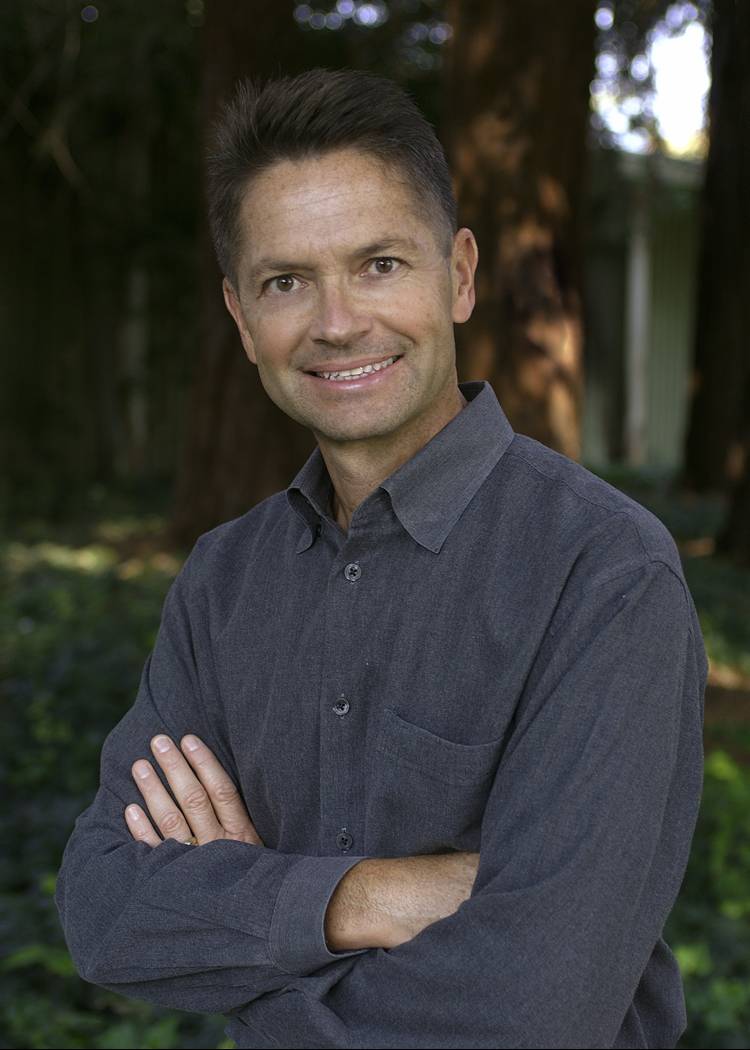 (Dear reader: Here you have a little gift to continue the Thanksgiving spirit. Enjoy the interview, and thank you for visiting our site.)
Prof. Robert Emmons studies gratitude for a living as Professor of Psychology at UC Davis and is Editor-In-Chief of the Journal of Positive Psychology. He has just published Thanks: How the New Science of Gratitude Can Make You Happier
Alvaro Fernandez: Welcome. Prof. Emmons, could you please provide us an overview of the Positive Psychology field so we understand the context for your research?
Robert Emmons: Sure. Martin Seligman and colleagues launched what was called “positive psychology in the late 90s as an antidote to the traditional nearly exclusive emphasis of “negative psychology” focused on fixing problems like trauma, addiction, and stress. We want to balance our focus and be able to help everyone, including high-functioning individuals. A number of researchers were investigating the field since the late 80s, but Seligman provided a new umbrella, a new category, with credibility, organized networks and funding opportunities for the whole field.
And where does your own research fit into this overall picture?
I have been researching gratitude for almost 10 years. Gratitude is a positive emotion that has traditionally been the realm of humanists and philosophers, and only recently the subject of a more scientific approach. We study gratitude not as a merely academic discipline, but as a practical framework to better functioning in life by taking control of happiness levels and practicing the skill of emotional self-regulation.
What are the 3 key messages that you would like readers to take away from your book?
First, the practice of gratitude can increase happiness levels by around 25%. Second, this is not hard to achieve — a few hours writing a gratitude journal over 3 weeks can create an effect that lasts 6 months if not more. Third, that cultivating gratitude brings other health effects, such as longer and better quality sleep time.
What are some ways to practice gratitude, and what benefits could we expect? Please refer to your 2003 paper in the Journal of Personality and Social Psychology, where I found fascinating quotes such as that “The ability to notice, appreciate, and savior the elements of one life has been viewed as a crucial element of well-being.
The most common method we use in our research is to ask people to keep a “Gratitude Journal” where you write something you feel grateful for. Doing so 4 times a week, for as little as 3 weeks, is often enough to create a meaningful difference in one level of happiness. Another exercise is to write a “Gratitude Letter” to a person who has exerted a positive influence on one’s life but whom we have not properly thanked in the past, and then to meet that person and read the letter to them face to face.
The benefits seem to be very similar using both methods in terms of enhanced happiness, health and wellbeing. Most of the outcomes are self-reported, but there is an increasing emphasis on measuring objective data such as cortisol and stress levels, heart rate variability, and even brain activation patterns. The work of Richard Davidson is exemplary in that respect, showing how mindfulness practice can rewire some activation patterns in the frontal lobes.
Now, let me give an overview of the paper you mention, titled Counting Blessings versus Burdens: An Experimental Investigation of Gratitude and Subjective Well-Being in Daily Life (note: reference below). The paper includes 3 separate studies, so I will just be able to provide a quick glimpse. More than a hundred adults were all asked to keep a journal, and were randomly assigned to 3 different groups. Group A had to write about things they felt grateful about. Group B about things they found annoying, irritating. Group C about things that had had a major impact on them. 2 out of the 3 different experiments were relatively intense and short term (keeping a daily journal for 2–3 weeks), while one required a weekly entry during 10 weeks.
Across the 3 different studies we found that people in the gratitude group generally evidenced higher-levels of well-being than those in the comparison conditions, especially when compared to Group B (the one journaling about hassles), but also compared to the “neutral” group.
In the longer study, which ran for 10 weeks, we also saw a positive effect on hours of sleep and on time spent exercising, on more optimistic expectations for the coming week, and fewer reported physical symptoms, such as pain. Additionally, we observed an increase in reported connectedness to other people and in likelihood of helping another person deal with a personal problem.
We could then say that we can train ourselves to develop a more grateful attitude and optimistic outlook in life, resulting in well-being and health improvements, and even in becoming better-not just happier- citizens. And probably one can expect few negative side effects from keeping a gratitude journal. What do you think prevents more people from benefiting from these research findings?
Great question, I reflect often on that. My sense is that some people feel uncomfortable talking about these topics, since they may sound too spiritual, or religious. Others simply don’t want to feel obligated to the person who helped them, and never come to realize the boost in energy, enthusiasm, and social benefits that come from a more grateful, connected life.
Judith Beck talked to us recently (interview notes here) about her work helping dieters learn important mental skills through cognitive therapy techniques. You talk about gratitude. Other positive psychologists focus on Forgiveness. How can we know which of these techniques may be helpful for us?
The key is to reflect on ones goal and current situation. For example, the practice of forgiveness can be most appropriate for people who have high levels of anger and resentment. Cognitive therapy has been shown to be very effective against depression. In a sense both groups are trying to eliminate the negative. Gratitude is different in that it is better suited for highly functioning individuals who simply want to feel better — enhancing the positive.
Prof. Emmons, thank you for your time, and research.
You are welcome.
—————
Related reading
- Book: Thanks: How the New Science of Gratitude Can Make You Happier
- Emmons, R. A. & McCullough, M. E. (2003). Counting blessings versus burdens: An experimental investigation of gratitude and subjective well-being in daily life. Journal of Personality and Social Psychology, 84, 377–389
- Excellent blog post analyzing that study
- Other interviews in our Neuroscience and Psychology Interview Series
Share this:

4 Comments
About SharpBrains
Top Articles on Brain Health and Neuroplasticity
Top 10 Brain Teasers and Illusions
Got the book?
Thanks for participating in the December 3, 2007, edition of the Carnival of Family Life, hosted this week at http://www.imaginif.com.au!!
That was a great interview. Gratitude is definitely something that has changed my life. Since I became grateful in my own life, things have been great. Definitely a good topic.
Indeed, the daily practice of gratitude can quickly wipe out the darkest feelings of depression, anxiety, and anger.
And it’s so easy to do.
By simply thanking God for each and every blessing in your life, no matter how small or trivial, you are practicing gratitude.
Say goodbye to Prozac!
I saw you at the LCA conference and enjoyed your presentation..the gratitude project is wonderful. You showed a video at the conference on gratitude and I would like to know if it could be made available.Let me know ‑I would like to show it to the teachers at my school.
Thanks
Sherrie Dunn