

Dr. Judith Beck on how to Train Your Brain to Think Like a Thin Person
 (Brain Fitness doesn’t require the use of expensive equipment. Your brain is enough. Today, as part of our research for The SharpBrains Guide to Brain Fitness, we are honored to interview Dr. Judith Beck on how cognitive techniques can be applied to improve our health and our lives)
Dr. Judith Beck is the Director of the Beck Institute for Cognitive Therapy and Research, Clinical Associate Professor of Psychology in Psychiatry at the University of Pennsylvania, and author of Cognitive Therapy: Basics and Beyond. Her most recent book is The Beck Diet Solution: Train Your Brain to Think Like a Thin Person.
Dr. Beck, thanks for your time. What does the Beck Institute do?
We have 3 main activities. One, we train practitioners and researchers through a variety of training programs. Two, we provide clinical care. Three, we are involved in research on cognitive therapy.
Please explain cognitive therapy in a few sentences
Cognitive therapy, as developed by my father Aaron Beck, is a comprehensive system of psychotherapy, based on the idea that the way people perceive their experience influences their emotional, behavioral, and physiological responses. Part of what we do is to help people solve the problems they are facing today. We also teach them cognitive and behavioral skills to modify their dysfunctional thinking and actions.
I understand that cognitive therapy has been tested for many years in a variety of clinical applications. What motivated you to bring those techniques to the weight-loss field by writing The Beck Diet Solution?
Since the beginning, I have primarily treated psychiatric outpatients with a variety of diagnoses, especially depression and anxiety. Some patients expressed weight loss as a secondary goal in treatment. I found that many of the same cognitive and behavioral techniques that helped them overcome their other problems could also help them to lose weight‚ and to keep it off.
I became particularly interested in the problem of overweight and was able to identify specific mindsets or cognitions about food, eating, hunger, craving, perfectionism, helplessness, self-image, unfairness, deprivation, and others, that needed to be targeted to help them reach their goal.
What research results back your finding that those techniques help?
Probably the best published study so far is the randomized controlled study by Karolinska Institute’s Stahre and Halstrom (2005, reference below). The results were striking: nearly all 65 patients completed the program and this short-term intervention (10-week, 30-hours) showed significant long-term weight reduction, even larger (when compared to the 40 individuals in the control group) after 18 months than right after the 10-weeks program.
That sounds impressive. Can you explain what makes this approach so effective?
A unique feature is that the book doesn’t offer a diet but does provide tools to develop the mindset that is required for sustainable success, for modifying sabotaging thoughts and behaviors that typically follow people’s initial good intentions. I help dieters acquire new skills. We have sold over 70,000 books so far, and are planning to release a companion workbook
So, in a sense, we could say that your book is complementary to all other diet books.
Exactly. It will help readers at setting and reaching their long-term goals, assuming that the diet is healthy, nutritious, and well-balanced.
The main message of cognitive therapy overall, and its application in the diet world, is straight-forward: problems losing weight are not one’s fault. Problems simply reflect lack of skills–skills that can be acquired and mastered through practice. Dieters who read the book or workbook learn a new cognitive or behavioral skill every day for six weeks. They practice some skills just once; they automatically incorporate others for their lifetime.
What are the cognitive and emotional skills and habits that dieters need to train, and where your book helps?
Great question. That is exactly my goal: to show how everyone can learn some critical skills. The key ones are:
1) How to motivate oneself. The first task that dieters do is to write a list of the 15 of 20 reasons why they want to lose weight and read that list every single day.
2) Plan in advance and self-monitor behavior. A typical reason for diet failure is a strong preference for spontaneity. I ask people to prepare a plan and then I teach them the skills to stick to it.
3) Overcome sabotaging thoughts. Dieters have hundreds and hundreds of thoughts that lead them to engage in unhelpful eating behavior. I have dieters read cards that remind them of key points, e.g., that it isn’t worth the few moments of pleasure they all get from eating something they hadn’t planned and that they’ll feel badly afterwards; that they can’t eat whatever they want, whenever they want, in whatever quantity they want, and still be thinner; that the scale is not supposed to go down every single day; that they deserve credit for each helpful eating behavior they engage in, to name just a few.
4) Tolerate hunger and craving. Overweight people often confuse the two. You experience hunger when your stomach feels empty. Craving is an urge to eat, usually experienced in the mouth or throat, even if your stomach is full.
When do people experience cravings?
Triggers can be environmental (seeing or smelling food), biological (hormonal changes), social (being with others who are eating), mental (thinking about or imagining tempting food), or emotional (wanting to soothe yourself when you are upset). The trigger itself is less important than what you do about it. Dieters need to learn exactly what to say to themselves and what to do when they have cravings so they can wait until their next planned meal or snack.
How can people learn that they don’t have to eat in response to hunger or craving?
I ask dieters, once they get medical clearance, to skip lunch one day, not eating between breakfast and dinner. Just doing this exercise once proves to dieters that hunger is never an emergency, that it is tolerable, that it doesn’t keep getting worse, but instead, comes and goes, and that they don’t need to “fix” their usually mild discomfort by eating. It helps them lose their fear of hunger. They also learn alternative actions to help them change their focus of attention. Feel hungry? Well, try calling a friend, taking a walk, playing a computer game, doing some email, reading a diet book, surfing the net, brushing your teeth, doing a puzzle. My ultimate goal is to train the dieter to resist temptations by firmly saying “No choice”, to themselves, then naturally turning their attention back to what they had been doing or engaging in whatever activity comes next.
You said earlier that some cravings follow an emotional reaction to stressful situations. Can you elaborate on that, and explain how cognitive techniques help?
In the short term, the most effective way is to identify the problem and try to solve it. If there is nothing you can do at the moment, call a friend, do deep breathing or relaxation exercises, take a walk to clear your mind, or distract yourself in another way. Read a card that reminds you that you all certainly not be able to lose weight or keep it off if you constantly turn to food to comfort yourself when you are upset. People without weight problems generally don’t turn to food when they are upset. Dieters can learn to do other things, too.
And in the long term, I encourage people to examine and change their underlying beliefs and internal rules. Many people, for example, want to do everything (and expect others to do everything) in a perfect way 100% of the time, and that is simply impossible. This kind of thinking leads to stress.
The title of the book includes a train your brain promise. Can you tell us a bit about the growing literature that analyzes the neurobiological impact of cognitive therapy?
Yes, that is a very exciting area. For years, we could only measure the impact of cognitive therapy based on psychological assessments. Today, thanks to fMRI and other neuroimaging techniques, we are starting to understand the impact our actions can have on specific parts of the brain.
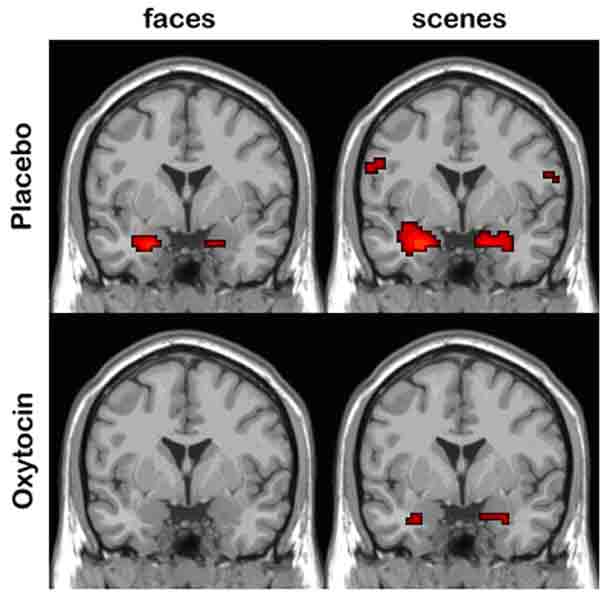
For example, take spider phobia. In a 2003 paper (reference below) scientists observed how, prior to the therapy, the fear induced by viewing film clips depicting spiders was correlated with significant activation of specific brain areas, like the amygdala. After the intervention was complete (one three-hour group session per week, for four weeks), viewing the same spider films did not provoke activation of those areas. Those individuals were able to “train their brains and managed to reduce the brain response that typically triggers automatic stress responses. And we are talking about adults.
Dr. Beck, that is exactly what we find most exciting about this emerging field of neuroplasticity: the awareness that we can improve our lives by refining, training our brains, and the growing research behind a number of tools such as cognitive therapy. Thanks a lot for sharing your thoughts with us.
My pleasure.
————————–
Research Papers mentioned:
Stahre L, Hallstrom T. (2005). “A short-term cognitive group treatment program gives substantial weight reduction up to 18 months from the end of treatment. A randomized controlled trial” Eating and Weight Disorders. 2005 Mar;10(1):51–8.
Paquette, V., Levesque, J., Mensour, B., Leroux, J. M., Beaudoin, G., Bourgouin, P., et al. (2003). Effects of cognitive-behavioral therapy on the neural correlates of spider phobia. Neuroimage, 18, 401–409.
Share this:

22 Comments
About SharpBrains
Top Articles on Brain Health and Neuroplasticity
Top 10 Brain Teasers and Illusions
Got the book?
“Train your brain to think like a thin person”
That is a horribly discriminate headline, you make it seem like there is a biological difference in the mentality or cognitive abilities between a thin and obese individual. While there are some biological traits that lead to obesity , I don’t think that obesity can be so readily trained into some sort of mindset to becoming thin.
Dear Sarah: there seems to be some communication problem. That is the title of the real book, and it reflects the key point of the book and the benefits of cognitive therapy: we can train our mindsets (which have a neurological base, so in practice we can train our brains) to adopt good attitudes, beliefs and skills that will help us not only lose weight but be able to maintain a healthy, fit body over the long term, beyond “quick fixes”. This is not innate (what I guess you call biological). I hope this helps.
Sarah Connar:
It’s a MENTALITY difference created by day to day habits that manifest into physical traits. This is a perfect example of teaching your brain the difference between ‘want’ and ‘need’ which is very often the reason why obese people often stay obese, why compulsive shoppers can’t break the habit, etc.
hey, thx for doing the good interview with Judith Beck. I do a regular Google blog search on that subject, as I am using the book myself, and have dropped close to 40 lbs in about 3 months, and am almost done with the weight-loss process, and now have to use the cognitive-behavioral tools to make sure I don’t backslide.
I happened to have a lot of experience with CBT, so I was able to apply the book quite quickly. For me, the most important thing was learning to Tolerate Discomfort. That is, learning to say NO to myself for certain Cravings, and not act on them, and to just observe the “painful emotions” increase and then extinquish themselves. Most of us will give into Cravings as we think NOT giving into them will be “too painful”. If we really follow through on it, we find its not that bad, and the Craving will extinguish itself, something like Classical conditioning, but due to cognitive evaluations like…“hey, I didn’t eat it, and its wasn’t that bad”.
There is some great stuff in that book, and CBT is an amazing set of cognitive-emotive-behavioral tools…
and the best thing about it, is that its not static, and its always being tested and falsified, so it can improve, this is because Dr. Aaron Beck has used the scientific method to develop CBT.
whoops, I forgot to mention there is an online group of folks doing the Beck Diet Solution at Peertrainer, you can join here for free if you are working through the book. There are about 90 members…
—————
MIND OVER MATTER
http://www.peertrainer.com/TeamDetails.aspx?GroupID=25340
John: thank you for that great comment.
CBT fan: thanks for sharing your first-hand perspective. And thanks for the offer, but I confess I am not on any diet program myself, my main interest is to understand how cognitive techniques can be used to develop mental skills that help us accomplish our goals, and Dr. Beck’s great work has been opening new ground. Good luck with your program!
hi there, yeah, my posting of the link would be for anyone who happens to read the blog who has the book and is looking for a place to sound-out a bit.
CBT is an amazing set of tools. You should try to get an interview with the Godfather himself, Dr. Aaron Beck, and ask him some questions about that, as he is a very smart guy. His book “The Integrative Power of Cognitive Therapy” is truly excellent.
He designed many tools, like the TIC-TOC method and many other ways to achieve Goals and problem solving.
Also, Dr. David Burns has written a number of general books from the CBT perspective as well. He has a new book out called WHEN PANIC ATTACKS which is pure CBT, he might do an interview as well.
In my view, CBT is the best “self-help” set of techniques out there, for dozens of reasons. The #1 reason is that they are science based, are Realistic, and so far haven’t been abused and oversold by hucksters…yet.
Some people have said CBT sounds like “The Secret”, but the reality is that it is the opposite of “The Secret” as CBT is the opposite of MAgical Thinking, that is a Cognitive Distortion.
Basically, CBT is literally the Scientific Method applied on a personal level. Ask Dr. Aaron Beck about that.
That sounds simple, but it is not.
CBT is applying the scientific method to our own cognitions and beliefs. That is heavy stuff…
CBT fan: very good comments. Thank you. I will in fact be talking more about some fascinating CBT studies.
And, why not, I will see if Dr. Aaron Beck if available for an interview. It would be a very stimulating honor to interview him.
Will check Dr. Burns book.
great idea.
Thanks, Carlos. I find Dr. Beck’s work fascinating.
CBT is great, because it is a step by step method to retrain oneself to react like someone who is able to feel emotions but not be overcome by them. Overeaters must be able to reframe their emotions which may be behind the cravings to be less “dangerous”, for example, “I feel as though I am worthless, but that is just a feeling or a thought, not absolute truth”, in order to tolerate the discomfort of experiencing them. This can work for more than just eating, as was mentioned earlier. I am so glad this method is getting more widespread credibility.
You could ask Dr. Aaron Beck about the many misconceptions about CBT, he has written about that.
For example, many therapists even criticize CBT for how it handles Emotions.
For example, above was mentioned that CBT seems brainwashy, and how it relates to Emotion.
But that is a tricky area.
For example, if a person digs into CBT beyond the charts, one sees that CBT is about human freedom. Look into the 10 Axioms of Cognitive Therapy by Dr. Aaron Beck.
http://www.amazon.com/Integrative-Power-Cognitive-Therapy/dp/1572303964
I see CBT as the opposite to any type of Preaching, as ultimately you are going to become your own therapist, and make up your own mind, and solved your own problems, etc.
As far as human emotion, that is extremely tricky. The common error about CBT is that it tried to negate human emotion, which again is the exact opposite of what CBT really is!
Its the old Straw Man argument again.
CBT is about feeling deeply, and feeling the entire range of human emotions. But it also gives a way to deal with extreme human emotions that screw people up.
But as far as I know, CBT has not yet been properly applied to enhancing human performance. This will have to be done in a scientific and careful way, as opposed to the typical method of the self-helper publishers of pulling things out of their posterior that they think will sell.
Judith Beck’s recent book, “Cognitive Therapy for Challenging Problems” is quite good, and deals a lot with Core Beliefs, which seem to be the foundation of our personalities and behaviors, emotions, assumptions, rule, and even thoughts.
Phil: thanks for your great comment.
CBT fan: I agree with many of your comments. What do you mean with “CBT has not yet been properly applied to enhancing human performance.”?
This is wonderful. Thanks for sharing this.
You are welcome, Wally. Let’s thank Judith for her work and time!
Interesting. This cognitive therapy is indeed great for our brain with all its benefits.
Very good article and i think the 1st step to losing weight is your mindset. You can’t lose weight just by thinking like a thin person, but it does help to have that mindset, as you are working on your goal to get thinner.
Yes, Kelly, what I think is Judith’s main message is that it is SKILLS that matter, and that we can all develop them.
Yes, great job. :) Interesting indeed.
Thanks Alvaro for bringing Beck’s work to the fore for discussion.
Two thoughts:
The generational issue here is writ large. The efficiency and success of skill based logic varies from work with children, teenagers and adults. Agreed?
Second, As an adult who can look back on teenage years when therapies for obesity and eating disorders focused simply on the “O.C.D” or addition motif, it’s great to see neuroscience weighing in on the subject.
May I suggest that with respect to dieting, mindset and the brain, we think about the role brain-mapping plays in body-mapping and body image. Behavior, after all, is embedded into a complex system of skills that work at the systemic level of the body “tissues” — skills that enable an embodied sense of being at peace (or in struggle) with onself or the world.
This is so exciting!! I spent 10 years trapped in my home by agoraphobia. A friend of mine, a physician who was in therapy, was given “The Feel Good Handbook,” which she passed on to me. What a horrible title :-) But I skimmed it anyway, just so I’d have something intelligent I could say to my friend that would show I appreciated her thoughtfulness. Ooooohmagoodness. None of the book made sense until I looked at my beloved dog and realized he would be lunch in another country, and only because of the way they think. I dove into that book, searched out others like it, then went looking for a CBT therapist that was close. He terminated therapy after 6 weeks and I’d achieved my top goals, the most important being able to renew my drivers license (long since lost because I couldn’t renew). He said I’d made exceptional progress and had gone as far as could be expected. Ha!! I kept digging and researching and working, working, working, working towards the day when I’d no longer have any boundaries. It took a very long time, but eventually the “tipping” point was achieved. I was “normal,” and then some, flying 150,000 miles around the globe in just one year.
I can’t believe I’ve been so cocky in my success that I never even considered applying CBT in controlling these ever-expanding thighs I’ve gotten in middle age. I’ve seen this book but thought it was a touchy-feely “The Secret” of thunder thighs.
Excuse me while I leave skid marks on the driveway while heading for Barnes & Noble :-)
Mary, enjoy :-)